Read Part 1 here.
Some people are always misrepresented by history. Two such personalities are Gopika-bai and Anandi-bai. Both a rightful place and credit are due for their contribution.
Gopika-bai came into the Peshwa house at a very young age of 8 after being married to Nanasaheb Balaji Bajirao, the eldest son of the glorious Peshwa Bajirao. Nanasaheb was trained in the courts of Shahu in Satara and also by his father, uncle and numerous other ministers. He started looking in to the matters of court at an early age of 15 years. Gopika-bai was an extremely intelligent person and the environment of the Peshwa family gave her encouragement to opine; and at a later stage to perhaps dabble in the administration herself. She was well learned, but could not read or write in Modi script, she resorted to the use of Devnagari scripts for the letters she wrote either to her husband or sons and grandson.
Gopika-bai is perhaps the only individual who saw both the zenith and the nadir of the Maratha Empire so closely. Bajirao was just setting himself up when Gopika-bai got married into the family. She saw inauguration of the grand palace Shaniwarwada, many victories by Bajirao and Chimaji Appa and those of her husband Nanasaheb and her brothers-in-law. Her brother was a respected minister in the court of Nanasaheb as well as Madhav-rao. Being the eldest of her generation, she had a lot of respect and authority. As the consort of the most powerful individual of that time, she had access to almost unbridled power. She was very religious by nature.
Gopika-bai was also struck with many tragedies in her life. Mostly people know of her three sons, but apparently, she had five! And she outlived all of them. Two sons were lost in infancy to disease and one on the Panipat battlefield. About half the Peshwa family was decimated at Panipat and Nanasaheb could not bear the brunt of the defeat and died of the shock. Her fourth son, Madhav-rao ascended the throne. Madhav-rao was forced to fight with his own uncle Raghoba to resolve the matters of regency and sedition. But Madhav-rao contracted tuberculosis in a few years and died. Her fifth son, Narayan-rao was killed in a conspiracy by his uncle Raghoba. At this stage, the other ministers intervened and prevented Raghoba, the main accused in Narayan-rao’s death, from ascending the throne. Narayan-rao’s wife was pregnant and gave birth to a male child, after Narayan-rao’s death – Sawai Madhav-rao. This infant was appointed the Peshwa and two powerful men of the times, Nana Phadnavis and Mahadji Shinde were made the regents. Gopika-bai outlived even Sawai Madhav-rao!
During the good days, Gopika-bai actively took part in the matters of administration. So much so, that at times even Nanasaheb considered her contribution as interference. He was so peeved by Gopika-bai’s bravado that to keep her under the tab, he actually married a girl almost one-third her age!
She was a good advisor to her son Madhav-rao after he ascended the throne. A few years into the reign of Madhav-rao Peshwa, Gopika-bai decided to retire and went on to live in almost seclusion. Some books claim she left Poona and went into seclusion to avenge Madhav-rao punishing her brother for the sack of Poona. However, it has now been proved that the events happened in exact reverse order – she retired earlier and sack of Poona came later.
In seclusion, she spent most of her time in religious activities. From her seclusion, Gopika-bai saw the unfolding of events only as a spectator. She saw her most able son Madhav-rao succumb to tuberculosis, Narayan-rao being murdered for petty politics and her grandson Sawai Madhav-rao not being given proper education, lest he replace his regents one day. Only in the last instance, Gopika-bai is seen to reprimand Nana Phadnavis for his negligence and write directly to Sawai Madhav-rao on how he should pull up his socks and get into the role of being a Peshwa. But for all her abilities, she never took active interest to make matters better. May be, history had a chance of being different if this very able and intelligent lady had remained active in politics!
The biggest villain produced by Maratha History must be Anandi-bai! Anandi-bai was married to Raghoba, the second son of Peshwa Bajirao. Raghoba was a good general and aspired to be a Peshwa himself and Anandi-bai encouraged her husband in his aspirations. However, by the rules of succession this was not possible and this lead to political conspiracy eventually resulting into Narayan-rao’s murder. It is here Anandi-bai’s role becomes prominent. She is accused of changing an important word in a letter going to mercenaries. Because of this change, the mercenaries read it as “Murder Narayan-rao” contrary to the original text that said “Capture Narayan-rao”. She was a co-accused in the case of regicide against Raghoba. However, Anandi-bai’s role in changing the text is controversial (either that or the Justice Ramshastri Prabhune took the easier route of keeping a woman out of controversy, we won’t know!). For this, she’s been the most hated woman in the Maratha History.
But what is the truth? Records and letters show a very different woman! Her aspirations of throne for her husband are well known and she never denied those. She was a very intelligent and a learned woman (for her times that was not very common) and made good use of free time by reading different books (mostly religious). She engaged in religious activities and charity for poor and needy. She was extremely loyal to her husband. Although Raghoba was an able general, he was very weak by character. Raghoba’s misbehavior caused many problems for Anandi-bai who was otherwise a god-fearing woman. Due to Raghoba’s nature and seditious activities, he had to be put under house arrest by Madhav-rao and naturally, Anandi-bai’s movements were also restricted and watched. Despite of this, Anandi-bai had a caring attitude towards Madhav-rao and advised him in the matters of politics. The case of regicide against Raghoba must have been very trying on her. Despite of this, she later took the role of a mentor for Sawai Madhav-rao; although she never returned to Poona after Raghoba’s death. She is also seen to have taken good care of Raghoba’s other wives, who were of the ages closer to be her daughters. She tried very hard to imbibe good value systems in her sons – one adopted, one natural – but as it turns out, both of them did not live up to her expectations. But for the circumstances created by her husband, history once again may have lost a very astute politician.
Friday, December 24, 2010


Monday, December 20, 2010
The Iron Ladies of Maratha Empire – Part 1
The Reconstruction Era of Germany attributes a lot to the women power. After all, since many men were gone, it was up to the women to take the country forward. Does the Maratha Empire also owe it to the women? Do they deserve a lot more respect and gratitude than they are given? To find out, I picked up a book called मराठे शाहितील मनस्विनी (Marathe-shaahi teel manasvini) by Dr. SR Deshpande.
The list of the ladies in this book is interesting. While it contains some well known names like Jijabai, Tarabai, Ahilyabai Holkar and Rani Laxmibai, it also touches upon various interesting but slightly lesser known names such as Yesubai (Sambhaji’s wife), Karveer Jijabai (the first queen of Kolhapur throne), Gopikabai (wife of Nanasaheb Peshwa), Anandibai (wife of Raghoba Peshwa) and Mastani.
The author Dr. Suresh Deshpande was very closely related to the effort of Marathi Vishwakosh – an attempt to create an exhaustive encyclopedia in Marathi and has worked very closely in evaluating various historical documents. While involved in this work, the author realized that there are many iron ladies in the history that kept the dream of Swaraj alive. For many though, documented information is not available. And though the author would have liked to include them, for the lack of information, the list is only limited to the above.
Did Jijabai, Shivaji’s mother need an introduction? Perhaps not! She was a direct descendant of a General in the Devgiri Court but was married into a family of lesser stature than hers. However, she ensured that Shahaji’s spark is kept alive and imbibed the principles of independence and self-government in her son Shivaji. She was known for her sense of justice and well management of the Pune Jahagir. Her upbringing of Shivaji was perfect and her encouragement to him always set higher standards. Even after Shivaji gained fame, her control on administration was tight and rarely anyone would not honor her wish. She is also seen taking important decisions in Shivaji’s absence and the generals and ministers were more than willing to accept her leadership. There is only one documented case of her decision being reversed and that too the reversal came after her death. This lady is placed very high on the respect scale!
Next the author moves to the lesser known figure in the history, Queen Yesubai, wife of the second Chhatrapati, Sambhaji. Married to Sambhaji at a very tender age of 5 or 6, she grew up under the tutelage of Jijabai and Shivaji. It is estimated that Yesubai may have been home-schooled along with her husband Sambhaji. The positive effect of this schooling is seen to dominate the history at a later stage. By the time Sambhaji died, Yesubai must have been only 26-27 years old and mother to Shivaji II or as history knows him Shahu. During Sambhaji’s time as Chhatrapati, he was mostly away on wars with Aurangzeb and Yesubai played a key role in the administration. She also took care of Sambhaji’s half-brother Rajaram and ensured that he was educated well. However, tragedy struck constantly and Sambhaji was killed by Aurangzeb. This is the time Yesubai took over the regent and leadership role very effectively. Marooned on the fort Raigad, she encouraged Rajaram to flee to south and take shelter at the fort Panhala. This ensured that two fronts were opened against Aurangzeb and in case of the (inevitable) fall of Raigad, someone is outside to take charge and keep the fighting going. Yesubai and her son Shahu were arrested by Aurangzeb and this virtual house arrest was to continue for next 30 years! In fact, Yesubai was not released even after Aurangzeb’s death and Shahu after his release had to use effective diplomacy with Shah Alam to get Yesubai released. During her tenure under Aurangzeb’s arrest, she was able to stave off the pressure on her and Shahu to get converted to Islam. She also ensured that Shahu was given education and knowledge of warfare and administration, hoping that someday, they will be released and Shahu will be rightfully able to claim his title and throne. It was her foresight in opening two fronts on the war against Aurangzeb that kept the nascent Maratha Empire alive and caused much consternation to Aurangzeb.
Once Rajaram had succeeded in taking shelter at Panhala, he, supported by his wife Tarabai and key ministers started attacking Aurangzeb. Later Rajaram went on to Gingee and continued the fight while Tarabai remained at Panhala and kept the war going. She was a true leader and a great motivator. She did not hesitate in taking a sword in hand and fight alongside of her army. Days together she camped with her soldiers and kept up the motivation levels. She also encouraged and promoted brave and astute generals to take care of the warfare and strategy. She literally brought Aurangzeb to his knees and sapped the morale of his army. For this, Tarabai is very keenly respected by the Marathas and in a true sense; it was her who kept the empire alive under very difficult conditions. Throughout her life, Tarabai saw many tragedies – death of Rajaram and her son (Ram Raje). For all the good things there was Tarabai, there is a big “but” waiting.
She was extremely distrustful by nature and liked to keep her generals under her tab lest they got stronger and unmanageable. Right from the beginning, Tarabai wanted Rajaram’s coronation. However, the ministers and generals opposed this idea citing that Shahu was alive in Aurangzeb’s prison. As her bad luck may be, she lost both her husband and her son. To that end, she encouraged education and upbringing of her step son Shivaji Raje (born to Rajaram’s second wife). Now, she started demanding that this child may be appointed Chhatrapati and she a regent. But the council of ministers again refused citing same reason that Shahu was still alive in Aurangzeb’s prison. That did not deter her from creating a wedge between the generals and making them take sides. This cost her dearly and she lost support of some of her generals. Around the same time, Shahu was released from the jail and came back staking claim to the throne. His disciplined upbringing by Yesubai made him an able, even if uninterested, administrator. But Tarabai remained steadfast in her claim to the throne. Many ministers and generals defected and joined Shahu. By now, even Shivaji Raje’s (Tarabai’s stepson) ambitions to ascend to the throne were cemented. Shahu and Tarabai engaged in a war, in which she was defeated. At the Pact of Warana, it was decided that the throne will be split in two, Shahu will rule from Satara and expand the kingdom in North and Shivaji Raje will rule from Kolhapur and expand the kingdom in South. When offered, Tarabai chose to stay with Shahu. However her basic distrustful nature and ambitions did not die despite of defeat. She saw the Kolhapur throne as the legitimate one and tried many seditious activities against Shahu. For this, she was put under virtual house arrest by Shahu. She saw the rise of Peshwas on the political horizon and also saw the empire reach a zenith. Her basic nature wouldn’t let her retire and she continued causing minor problems to both Nanasaheb and Madhavrao Peshwas. She died a few months after the Maratha defeat at Panipat.
Having grown under the tutelage of Tarabai, Shivaji Raje’s wife, Karveer-Jijabai may have picked up a characteristic or two of her mother in law. Jijabai fought valiantly alongside her husband against Shahu and after the establishment of the Kolhapur Throne, took keen interest in its administration and well being of the subjects. After Shivaji Raje’s death, she took over as a regent.
The Kolhapur throne was not considered legitimate by many of Shahu’s ministers and especially the powerful Peshwas. The Peshwas tried many tactics to dissolve the throne and assimilate the fertile region into Shahu’s empire. But Jijabai’s instinct for survival was strong. She astutely understood the political scenario. The initial pact of Peshwas not venturing into south was long forgotten and Nanasaheb made many trips into Karnataka to fight against Nizam. This caused a very palpable threat to Kolhapur’s existence as a separate state. Knowing that she was militarily no match to the Peshwas, first she tried to cajole Sadashivbhau Peshwa into defecting to her side. Sadashivbhau was Nanasaheb’s first cousin and a very able administrator and an astute general. Losing Sadashivbhau would have been extremely detrimental to Nanasaheb. However, Nanasaheb was an even astute and cunning administrator. Realizing the credible threat from Jijabai, he not only distracted Sadashivbhau, but also extracted promise of loyalty from him. Knowing Jijabai, he also passed on the message that the Peshwas will not cause a threat to Kolhapur’s existence. But Nanasaheb did not live up to that promise and encouraged two of his generals – Ghorpade and Raste – to attack Kolhapur. To his surprise, Jijabai defeated these generals and came out victorious in this war. However, she was weak and if Peshwas so desired they could easily have bulldozed the state of Kolhapur. To that end, Jijabai took the path of diplomacy, sending Nanasaheb a “rakhee”, proclaiming him as her brother and asking for bangles in return. After that the Peshwas are not known to have caused any problems to the Kolhapur Throne.
Among other women of history, the writer takes up the case of Mastani as well. Normally she is known as a concubine of Bajirao. However, historically, it is proved that she was daughter of the King Chhatrasal of Bundelkhand, born of one of his Muslim queens. The King of Bundelkhand was a follower of Ek-ishwari Pranami Panth (One God sect?!) and hence did not discriminate people on the basis of caste or religion. Hence when Mastani chose to follow the Islam, he did not object to it. According to his belief, the kind of worship did not matter so long as you wanted to be one with the god. As a princess, Mastani was well educated and also trained in warfare. Her married life though was not a very happy one. The conventional Hindu family of Bajirao did not condone his wayward behavior for having married a Muslim girl! Constant conspiracies by Bajirao’s mother Radhabai and his brother Chimaji Appa caused much heartburn to both Mastani and Bajirao. This chapter is dedicated to more or less listing these conspiracies and how Mastani remained steadfast despite the constant threat from the Peshwa family.
Hereafter, the Peshwas firmly established themselves and Poona became a power center, with the role of Satara and Kolhapur thrones diminishing slowly.
(To be continued)
The list of the ladies in this book is interesting. While it contains some well known names like Jijabai, Tarabai, Ahilyabai Holkar and Rani Laxmibai, it also touches upon various interesting but slightly lesser known names such as Yesubai (Sambhaji’s wife), Karveer Jijabai (the first queen of Kolhapur throne), Gopikabai (wife of Nanasaheb Peshwa), Anandibai (wife of Raghoba Peshwa) and Mastani.
The author Dr. Suresh Deshpande was very closely related to the effort of Marathi Vishwakosh – an attempt to create an exhaustive encyclopedia in Marathi and has worked very closely in evaluating various historical documents. While involved in this work, the author realized that there are many iron ladies in the history that kept the dream of Swaraj alive. For many though, documented information is not available. And though the author would have liked to include them, for the lack of information, the list is only limited to the above.
Did Jijabai, Shivaji’s mother need an introduction? Perhaps not! She was a direct descendant of a General in the Devgiri Court but was married into a family of lesser stature than hers. However, she ensured that Shahaji’s spark is kept alive and imbibed the principles of independence and self-government in her son Shivaji. She was known for her sense of justice and well management of the Pune Jahagir. Her upbringing of Shivaji was perfect and her encouragement to him always set higher standards. Even after Shivaji gained fame, her control on administration was tight and rarely anyone would not honor her wish. She is also seen taking important decisions in Shivaji’s absence and the generals and ministers were more than willing to accept her leadership. There is only one documented case of her decision being reversed and that too the reversal came after her death. This lady is placed very high on the respect scale!
Next the author moves to the lesser known figure in the history, Queen Yesubai, wife of the second Chhatrapati, Sambhaji. Married to Sambhaji at a very tender age of 5 or 6, she grew up under the tutelage of Jijabai and Shivaji. It is estimated that Yesubai may have been home-schooled along with her husband Sambhaji. The positive effect of this schooling is seen to dominate the history at a later stage. By the time Sambhaji died, Yesubai must have been only 26-27 years old and mother to Shivaji II or as history knows him Shahu. During Sambhaji’s time as Chhatrapati, he was mostly away on wars with Aurangzeb and Yesubai played a key role in the administration. She also took care of Sambhaji’s half-brother Rajaram and ensured that he was educated well. However, tragedy struck constantly and Sambhaji was killed by Aurangzeb. This is the time Yesubai took over the regent and leadership role very effectively. Marooned on the fort Raigad, she encouraged Rajaram to flee to south and take shelter at the fort Panhala. This ensured that two fronts were opened against Aurangzeb and in case of the (inevitable) fall of Raigad, someone is outside to take charge and keep the fighting going. Yesubai and her son Shahu were arrested by Aurangzeb and this virtual house arrest was to continue for next 30 years! In fact, Yesubai was not released even after Aurangzeb’s death and Shahu after his release had to use effective diplomacy with Shah Alam to get Yesubai released. During her tenure under Aurangzeb’s arrest, she was able to stave off the pressure on her and Shahu to get converted to Islam. She also ensured that Shahu was given education and knowledge of warfare and administration, hoping that someday, they will be released and Shahu will be rightfully able to claim his title and throne. It was her foresight in opening two fronts on the war against Aurangzeb that kept the nascent Maratha Empire alive and caused much consternation to Aurangzeb.
Once Rajaram had succeeded in taking shelter at Panhala, he, supported by his wife Tarabai and key ministers started attacking Aurangzeb. Later Rajaram went on to Gingee and continued the fight while Tarabai remained at Panhala and kept the war going. She was a true leader and a great motivator. She did not hesitate in taking a sword in hand and fight alongside of her army. Days together she camped with her soldiers and kept up the motivation levels. She also encouraged and promoted brave and astute generals to take care of the warfare and strategy. She literally brought Aurangzeb to his knees and sapped the morale of his army. For this, Tarabai is very keenly respected by the Marathas and in a true sense; it was her who kept the empire alive under very difficult conditions. Throughout her life, Tarabai saw many tragedies – death of Rajaram and her son (Ram Raje). For all the good things there was Tarabai, there is a big “but” waiting.
She was extremely distrustful by nature and liked to keep her generals under her tab lest they got stronger and unmanageable. Right from the beginning, Tarabai wanted Rajaram’s coronation. However, the ministers and generals opposed this idea citing that Shahu was alive in Aurangzeb’s prison. As her bad luck may be, she lost both her husband and her son. To that end, she encouraged education and upbringing of her step son Shivaji Raje (born to Rajaram’s second wife). Now, she started demanding that this child may be appointed Chhatrapati and she a regent. But the council of ministers again refused citing same reason that Shahu was still alive in Aurangzeb’s prison. That did not deter her from creating a wedge between the generals and making them take sides. This cost her dearly and she lost support of some of her generals. Around the same time, Shahu was released from the jail and came back staking claim to the throne. His disciplined upbringing by Yesubai made him an able, even if uninterested, administrator. But Tarabai remained steadfast in her claim to the throne. Many ministers and generals defected and joined Shahu. By now, even Shivaji Raje’s (Tarabai’s stepson) ambitions to ascend to the throne were cemented. Shahu and Tarabai engaged in a war, in which she was defeated. At the Pact of Warana, it was decided that the throne will be split in two, Shahu will rule from Satara and expand the kingdom in North and Shivaji Raje will rule from Kolhapur and expand the kingdom in South. When offered, Tarabai chose to stay with Shahu. However her basic distrustful nature and ambitions did not die despite of defeat. She saw the Kolhapur throne as the legitimate one and tried many seditious activities against Shahu. For this, she was put under virtual house arrest by Shahu. She saw the rise of Peshwas on the political horizon and also saw the empire reach a zenith. Her basic nature wouldn’t let her retire and she continued causing minor problems to both Nanasaheb and Madhavrao Peshwas. She died a few months after the Maratha defeat at Panipat.
Having grown under the tutelage of Tarabai, Shivaji Raje’s wife, Karveer-Jijabai may have picked up a characteristic or two of her mother in law. Jijabai fought valiantly alongside her husband against Shahu and after the establishment of the Kolhapur Throne, took keen interest in its administration and well being of the subjects. After Shivaji Raje’s death, she took over as a regent.
The Kolhapur throne was not considered legitimate by many of Shahu’s ministers and especially the powerful Peshwas. The Peshwas tried many tactics to dissolve the throne and assimilate the fertile region into Shahu’s empire. But Jijabai’s instinct for survival was strong. She astutely understood the political scenario. The initial pact of Peshwas not venturing into south was long forgotten and Nanasaheb made many trips into Karnataka to fight against Nizam. This caused a very palpable threat to Kolhapur’s existence as a separate state. Knowing that she was militarily no match to the Peshwas, first she tried to cajole Sadashivbhau Peshwa into defecting to her side. Sadashivbhau was Nanasaheb’s first cousin and a very able administrator and an astute general. Losing Sadashivbhau would have been extremely detrimental to Nanasaheb. However, Nanasaheb was an even astute and cunning administrator. Realizing the credible threat from Jijabai, he not only distracted Sadashivbhau, but also extracted promise of loyalty from him. Knowing Jijabai, he also passed on the message that the Peshwas will not cause a threat to Kolhapur’s existence. But Nanasaheb did not live up to that promise and encouraged two of his generals – Ghorpade and Raste – to attack Kolhapur. To his surprise, Jijabai defeated these generals and came out victorious in this war. However, she was weak and if Peshwas so desired they could easily have bulldozed the state of Kolhapur. To that end, Jijabai took the path of diplomacy, sending Nanasaheb a “rakhee”, proclaiming him as her brother and asking for bangles in return. After that the Peshwas are not known to have caused any problems to the Kolhapur Throne.
Among other women of history, the writer takes up the case of Mastani as well. Normally she is known as a concubine of Bajirao. However, historically, it is proved that she was daughter of the King Chhatrasal of Bundelkhand, born of one of his Muslim queens. The King of Bundelkhand was a follower of Ek-ishwari Pranami Panth (One God sect?!) and hence did not discriminate people on the basis of caste or religion. Hence when Mastani chose to follow the Islam, he did not object to it. According to his belief, the kind of worship did not matter so long as you wanted to be one with the god. As a princess, Mastani was well educated and also trained in warfare. Her married life though was not a very happy one. The conventional Hindu family of Bajirao did not condone his wayward behavior for having married a Muslim girl! Constant conspiracies by Bajirao’s mother Radhabai and his brother Chimaji Appa caused much heartburn to both Mastani and Bajirao. This chapter is dedicated to more or less listing these conspiracies and how Mastani remained steadfast despite the constant threat from the Peshwa family.
Hereafter, the Peshwas firmly established themselves and Poona became a power center, with the role of Satara and Kolhapur thrones diminishing slowly.
(To be continued)
Saturday, July 17, 2010
Book Review – Mandalay’s Prisoner
Almost more than a year ago, I bought the book Mandalaycha Rajbandi. It had been making news in Marathi papers but still took me a lot of time to complete reading this book. The book is about the political life of Lokmanya Tilak and covers more than the school history books do. The book has been written by Arvind V Gokhale. Gokhale is one of the eminent journalists and columnists in Marathi press. He also worked as the editor of Kesari, Tilak's newspaper for over a decade. He has devotedly studied Tilak and the quality of the book shows it. The book is set from 1897 thro to 1914, and does not deal with the standard text book contributions of Tilak such as Ganpati Festival and famous quotes. What the book does deal with is, the British bureaucracy, handling of various administrative issues such as the plague epidemic and drought and famine, Tilak’s fiery brand of journalism and more importantly, the politics and infighting within Indian National Congress and the Congress split of 1908!
The book also deals with a lot of refreshing details of Congress Conventions and the court cases against Tilak and in my opinion in tad too many details of the editorials and opinions published in Kesari at that time. The latter could have been cut a little bit either to reduce the size of the book or to include some other details or could have been dealt with via commentary on specific sections. However, the author chose to reprint many of the editorials published at that time and all the speeches that Tilak gave in the court hearing.
Unlike during the later time, there was no category as a political prisoner and Tilak had to be part of the prison system as a common criminal. The charges in three cases were sedition and high treason of which only in the third case Tilak was acquitted. In the first case, Tilak was behind the bars for two years and in the second case, was sent off to Mandalay (via Mumbai and Ahmadabad) for a period of two days short of six years.
The book starts with a backdrop of the drought and the changes the British Government made to the laws that made life miserable. Pune also suffered from the plague epidemic and the strategies of Rand, the then Commissioner of Pune, in containing the plague caused much hardship to the people. It was under those circumstances that Tilak wrote several editorials in Kesari which caused much heartburn to the Government. Tilak may directly have instigated the Chapekar Brothers to kill Rand and naturally, he came under the scanner of the police. Curzon’s time was nothing less than tyranny and Tilak and his newspaper were on the forefront of criticism. And partition of Bengal brought about the most scathing attacks on the British.
Tilak was also a chief leader of the Congress Party at that time and had a great influence on the thought process. By the end of the first decade of 1900, the Congress was at a fork – complete independence or limited self-rule? And this created two groups – the extremists and the moderates. The tussle between the extremists and the moderates has been captured in great details. Various thought processes by Gopal Krishna Gokhale the leader of the moderates was in direct opposition to the extremist’s thought line. The extremists demanded full freedom, national education, boycott and swadeshi (use of local products). But the moderates believed this will lead to a confrontation with the government and can’t do any good to either Congress or to the cause of freedom. It is claimed that Ferozshah Mehta, Rasbihari Ghosh and others in the moderates’ camp played dirty politics to not let the extremists’ demands come on table. The venues and the possible chairman for the convention were changed many times. The moderates’ went so far as to deny Lala Lajpat Rai a chance to chair the meet lest it would make the government uncomfortable.
Tilak the leader of the extremists’ group was a strong critique of the moderates’ policies and this lead to a divide among the two groups. The Surat Convention literally led to fist fight and throwing of chairs and a split in the party.
Aggressiveness of Tilak and his criticism of the government brought him under the radar several times. The government was looking at possibilities of booking him under the clause of treason and did so eventually. In both the cases, Tilak defended himself with help of eminent lawyers. The official translation of the Marathi articles was challenged, debated and shredded apart, but the government found loopholes. In both the cases, the result was almost pre-decided before the case. Irony is that, in the first case, advocate Dawar defended Tilak but by the second case, Dawar had become a justice himself and presided over the case. During the second case, Tilak was helped by Jinnah among other lawyers and used his own intelligence to cleverly breakdown the government’s argument. His speech in the court was very remarkable, especially given that he was not even allowed notes and had to defend himself without knowing what the government’s exact stance would be. The jury was selected to heavily favor the government as well. It is claimed that Justice Dawar was very strict in his dealing with Tilak and did not heed to Tilak’s age while handing out the conviction. The only saving grace was that the rigorous imprisonment statement was abrogated to simple imprisonment.
While in Mandalay, Tilak had to undergo many hardships nevertheless. The hot and humid climate took its toll; exacerbated by age and ailments like Diabetes and Blood Pressure. Tilak also had to bear the brunt of the news of his wife’s death while in prison. The sketch of his prison life shows a sensitive caring husband and father worried about the well being of his family. The time Tilak got at the prison was well utilized in reading and writing. The silver lining of the prison may have been several books published out of the manuscripts written while in the prison.
Could Indian history have been different if the Congress were not so divided in its principles in early 1900s? Tilak had prepared not only for the fight for freedom but also how to govern once self-rule was attained. His knowledge about the Irish struggle was very deep. And his plans for Home Rule League were very concrete. May be history would have indeed been different had the Congress been united in its early days!
The book also deals with a lot of refreshing details of Congress Conventions and the court cases against Tilak and in my opinion in tad too many details of the editorials and opinions published in Kesari at that time. The latter could have been cut a little bit either to reduce the size of the book or to include some other details or could have been dealt with via commentary on specific sections. However, the author chose to reprint many of the editorials published at that time and all the speeches that Tilak gave in the court hearing.
Unlike during the later time, there was no category as a political prisoner and Tilak had to be part of the prison system as a common criminal. The charges in three cases were sedition and high treason of which only in the third case Tilak was acquitted. In the first case, Tilak was behind the bars for two years and in the second case, was sent off to Mandalay (via Mumbai and Ahmadabad) for a period of two days short of six years.
The book starts with a backdrop of the drought and the changes the British Government made to the laws that made life miserable. Pune also suffered from the plague epidemic and the strategies of Rand, the then Commissioner of Pune, in containing the plague caused much hardship to the people. It was under those circumstances that Tilak wrote several editorials in Kesari which caused much heartburn to the Government. Tilak may directly have instigated the Chapekar Brothers to kill Rand and naturally, he came under the scanner of the police. Curzon’s time was nothing less than tyranny and Tilak and his newspaper were on the forefront of criticism. And partition of Bengal brought about the most scathing attacks on the British.
Tilak was also a chief leader of the Congress Party at that time and had a great influence on the thought process. By the end of the first decade of 1900, the Congress was at a fork – complete independence or limited self-rule? And this created two groups – the extremists and the moderates. The tussle between the extremists and the moderates has been captured in great details. Various thought processes by Gopal Krishna Gokhale the leader of the moderates was in direct opposition to the extremist’s thought line. The extremists demanded full freedom, national education, boycott and swadeshi (use of local products). But the moderates believed this will lead to a confrontation with the government and can’t do any good to either Congress or to the cause of freedom. It is claimed that Ferozshah Mehta, Rasbihari Ghosh and others in the moderates’ camp played dirty politics to not let the extremists’ demands come on table. The venues and the possible chairman for the convention were changed many times. The moderates’ went so far as to deny Lala Lajpat Rai a chance to chair the meet lest it would make the government uncomfortable.
Tilak the leader of the extremists’ group was a strong critique of the moderates’ policies and this lead to a divide among the two groups. The Surat Convention literally led to fist fight and throwing of chairs and a split in the party.
Aggressiveness of Tilak and his criticism of the government brought him under the radar several times. The government was looking at possibilities of booking him under the clause of treason and did so eventually. In both the cases, Tilak defended himself with help of eminent lawyers. The official translation of the Marathi articles was challenged, debated and shredded apart, but the government found loopholes. In both the cases, the result was almost pre-decided before the case. Irony is that, in the first case, advocate Dawar defended Tilak but by the second case, Dawar had become a justice himself and presided over the case. During the second case, Tilak was helped by Jinnah among other lawyers and used his own intelligence to cleverly breakdown the government’s argument. His speech in the court was very remarkable, especially given that he was not even allowed notes and had to defend himself without knowing what the government’s exact stance would be. The jury was selected to heavily favor the government as well. It is claimed that Justice Dawar was very strict in his dealing with Tilak and did not heed to Tilak’s age while handing out the conviction. The only saving grace was that the rigorous imprisonment statement was abrogated to simple imprisonment.
While in Mandalay, Tilak had to undergo many hardships nevertheless. The hot and humid climate took its toll; exacerbated by age and ailments like Diabetes and Blood Pressure. Tilak also had to bear the brunt of the news of his wife’s death while in prison. The sketch of his prison life shows a sensitive caring husband and father worried about the well being of his family. The time Tilak got at the prison was well utilized in reading and writing. The silver lining of the prison may have been several books published out of the manuscripts written while in the prison.
Could Indian history have been different if the Congress were not so divided in its principles in early 1900s? Tilak had prepared not only for the fight for freedom but also how to govern once self-rule was attained. His knowledge about the Irish struggle was very deep. And his plans for Home Rule League were very concrete. May be history would have indeed been different had the Congress been united in its early days!
Thursday, January 28, 2010
The Great Indian Safari
There was a time, when men’s fashion was in the hands of the likes of Vaste Tailors or Sangam Tailors. The moneyed ones went to Elite Tailors, making sure to pronounce it as A-light. The little more moneyed ones probably relied on a stray Akbarallys or outfits made using Raymond or Khatau Mills! What a bush-shirt is I know not, but it seems everyone wore it. Your financial status would drive whether it was a short-sleeved one or you had money to spend on the extra cloth for a long-sleeved. The second fashion statement mostly came from the breast pocket – some liked a flat bottomed, some liked a conical bottomed. Some liked two – one to keep money and the other to keep cigarettes. Some even had a small section to keep a pen! The third fashion statement was the Safari suit!
There was a time, when a six year old was condoned for not knowing the gender based clothing rules. Yours truly had taken some fancy to his sister’s red velvet sandals that she bought for our aunt’s wedding. “I want the same chappals for the wedding”, I demanded of my mother. A slight nod of hers may have been accompanied by a lot of worry and a hope that I grow up fine! With all the excitement of wedding shopping, my (maternal) uncle had slightly different plans. He chose a cloth for my cousin and I and we were to wear the safari suits for the wedding reception - a shiny brown color to match my fair skin and brown hair and a creamy color for my cousin. The velvet chappals were soon forgotten. The suits were stitched and ready for the wedding. Did I look handsome? You bet! The suit was largely forgotten after that dazed evening.
Why Indian men wore safari suits is a big enigma to me. And why the safari suit was such vogue is an even bigger enigma. The four pockets on the front of a loose fitting shirt looked funny. The pleats on the pockets and sometimes on the back were considered decorative. (Note, decorative, not fashionable!) The pant color always matched the shirt color – no innovation left for the fashionable ones. Safari suit was an indicator that I may have little more money than you may. Safari suits were a trademark of the Indian babus. In fact, two of my relatives, who were the modest government servants, made it a point to wear the suits every so often. And a few others who worked for the private companies also chose to wear safari suits on special occasions. But I don’t recollect wearing my lone safari suit again. It must have shrunk staying in our Godrej cupboard or I may have grown up! It must have eventually made its way to the clothes-to-utensils-exchanger.
Thank god that the suit has fallen off the radar of the modern metrosexuals. After all, will your average Elite Tailors compete with the barrage of the Park Avenues and the Arrows and the Van Huesens?
There was a time, when a six year old was condoned for not knowing the gender based clothing rules. Yours truly had taken some fancy to his sister’s red velvet sandals that she bought for our aunt’s wedding. “I want the same chappals for the wedding”, I demanded of my mother. A slight nod of hers may have been accompanied by a lot of worry and a hope that I grow up fine! With all the excitement of wedding shopping, my (maternal) uncle had slightly different plans. He chose a cloth for my cousin and I and we were to wear the safari suits for the wedding reception - a shiny brown color to match my fair skin and brown hair and a creamy color for my cousin. The velvet chappals were soon forgotten. The suits were stitched and ready for the wedding. Did I look handsome? You bet! The suit was largely forgotten after that dazed evening.
Why Indian men wore safari suits is a big enigma to me. And why the safari suit was such vogue is an even bigger enigma. The four pockets on the front of a loose fitting shirt looked funny. The pleats on the pockets and sometimes on the back were considered decorative. (Note, decorative, not fashionable!) The pant color always matched the shirt color – no innovation left for the fashionable ones. Safari suit was an indicator that I may have little more money than you may. Safari suits were a trademark of the Indian babus. In fact, two of my relatives, who were the modest government servants, made it a point to wear the suits every so often. And a few others who worked for the private companies also chose to wear safari suits on special occasions. But I don’t recollect wearing my lone safari suit again. It must have shrunk staying in our Godrej cupboard or I may have grown up! It must have eventually made its way to the clothes-to-utensils-exchanger.
Thank god that the suit has fallen off the radar of the modern metrosexuals. After all, will your average Elite Tailors compete with the barrage of the Park Avenues and the Arrows and the Van Huesens?
Friday, July 24, 2009
जावे मालिकांच्या गावा
फार वर्षांपुर्वी स्टार ट्रेक ची सुरुवात धीर गंभीर आवाजात होत असे - टू गो व्हेअर नो मॅन हॅज गॉन. मग कोणी चहाटळ लोकांनी त्याची "हं, म्हणजे बायकांची बाथरूम ना" असं म्हणून हेटाळणी केली होती. म्हणजे कॅप्टन कर्क च्या पंखात बळ यायच्या आतच त्यातली हवा काढून घेतली. आज मी तसाच एक प्रयत्न करून बघणार आहे. टू गो व्हेअर नो मॅन...नाही हं, तस काही मनात आणू नका. बायकांची बाथरूम म्हणून चार जोडे खायाची माझी ईच्छा नाही!
ई, मी, झी वगैरे अक्षरं घेवून टीव्ही चॅनल्स सुरु झाले आणि बघता बघता या नविन जगाची सुरुवात झाली. कॉलेज मध्ये असताना चुकून कधी एमटीव्ही चा धांगडधींगा लावला तर आमच्या वेळी असं काही नव्हत हे ऐकवलं जायाच. पण एकच एक दूरदर्शन चा जमाना जाऊन केबल आलं आणि एक नविन जग सुरु झालं. संध्याकाळी ६ ते रात्री १० मालिकांच गुर्हाळ सुरु झालं आणि सहाजिकच नो मॅन्स् वर्ल्ड सुरु झालं.
श्वेतांबरा दूरदर्शन वर होवून गेली...पण नंतर डेली सोप नी आगदी तोंडाला फेस आणलाय. नावं तरी काय काय तर म्हणे आभाळमाया, वादळवाट, सोनियाचा ऊंबरा वगैरे. आणि स्टोरी काय तर बदला, गॉडी मेकप, थॊडा आणखिन बदला. आणि हे कमी पडत म्हणून लांबण लावणे हा जोडधंदा.
संवाद इतके उत्क्रुष्ट की ह्यांनी फक्त ग्यानपीठाच्या चपत्या खाव्या. हे एक उदाहरण बघा. एक रिकामा हॉल. जोरजोरात बेल वाजते. मग एक पोक्त बाई, पदरानी कपाळाला न आलेला घाम पुसत आले आले करत बाहेर येते आणि दार उघडते. दारात एक टीशर्ट मधून मसल्स बाहेर येत असलेला हसतमुख तरूण. मग ह्या काकू-पुतण्याचे एकमेकांकडे बघून स्मितहास्य. ह्यात बरच म्युझिक. "अरे, ये, ये...ऊन्हाचा आलास एवढा" म्हणत काकू स्वागत करते आणि आत पाणी आणायला निघून जाते. पुतण्या तोवर एक मासिक चाळतो. पाण्याचा ग्लास भरून काकू परत बाहेर येते. मग त्या दोघात पुन्हा स्मितहास्य. पुतण्या घटाघट पाणी पीतो. "थांब हं, चहा ठेवते" - काकू. "नको नको मी आत्तच जेवून आलो" - पुतण्या. चहाला नाही म्हणलं तर पाप लागत ही शिकवण पुतण्या विसरलेला दिसतो. बरं इतक जर ऊन मी म्हणतय, तर काकूनी तरी लिंबू सरबत विचारावं ना...ते नाही. एवढ्यात ब्रेकची वेळ होते.
आता मला सांगा, चार स्मितहास्ये, एक ग्लास पाणी आणि आर्धा थेंब घाम या मध्ये कथानक कुठे गेलं?
कथानक कधी जर पुढे सरकलच तर कशी गम्मत येते बघा. अधुरी म्हणता म्हणता पुरी न होणाऱ्या कहाणीतला नायक मरतो. त्याला अगदी अग्नी बिग्नी दिला जातो...तर पुढच्या चौथ्या भागात हा परत जिवंत. तोही जश्याचातसा! म्हणजे पुनर्जन्मावर किती हा अगाढ विश्वास? बरं त्याहूनही जास्त विश्वास प्लॅस्टीक सर्जरीवर. इतका की सर्जरी झालेली व्यक्ती नुसतीच चांगली नाही दिसत तर तिची ऊंची सुध्दा वाढलेली असते! एका मलिकेत काय तर म्हणे गाडीला अपघात होतो आणि गाडी चालवणारी महिला माहिमच्या खाडीमध्ये पडते. तिच्यावर लगेच प्लॅस्टिक सर्जरी. का, तर म्हणे माशांनी तिचा चेहरा खल्ला. आता महिमच्या खाडीमध्ये मासे असते तर मुंबईतल्या तमाम जनतेनी ते शिल्लक ठेवले असते का?
जसं प्लॅस्टीक सर्जरीच तसचं लफड्यांच. ह्याचं तिच्या बरोबर, तिचं आणि कुणा बरोबर...एक ना अनेक. मला अजूनही आठवतं, स्टार मूव्हीज वर वगैरे Pretty Woman किंवा Top Gun मध्ये तसले ’सीन’ आले की आम्ही पटकन चॅनल बदलत असू. पण अलिकडचे हे मालिकावाले...शीव, शीव. आमची बयको लग्नाच्यावेळी नुसतीच वधू झाली. ईथे टीव्हीत मुली कुलवधू कश्या होतात ते बघण्यासाठी मी एक मलिका बघू लागलो. बदला आणि कुंभांडां मधून वेळात वेळ काढून हिरो-हिरॉईन चक्क एका हॉटेलात जातात. राजे शिर्के देशमुखांची पोर पळवतात. मला मात्र यात आईला एम्बॅरॅस करण्याची संधी सापडते - हे प्री मरायटल की झालं यांच लग्न? असा प्रश्न मी विचारून टाकतो. ऊत्तरा दाखल एक जळजळीत कटाक्ष मिळतो. बरं सगळं करून सवरून झालं की यांच्या पोटातली पोरं दहा-दहा महिने बाहेरच येत नाहीत. मलाच काळजी लागून रहाते. रोज ऑफिस मधून परत आल्यावर मी विचारायचो अजूनतिकेचं काय झालं?
दुसरीकडे वेगळाच प्रकार. एक दिवस नट्टा-पट्टा करून रेशम टिपणीस दादांकडे येते. हे दादा म्हणे रोज दत्त महाराजांशी बोलायचे. तर हिनी दादांना काय विचारावं? दादा, मला आई व्हायचंय. म्हणजे घरी धडधाकट नवरा असताना, दादांनी काय करावं अशी या पात्राची अपेक्षा होती? स्पर्म डोनेशन?
आता तुम्ही म्हाणाल घरचेच होऊन जातात हे लोकं...पण किती? एक किस्सा सांगतो. एकदा गणपतीमध्ये माझ्या मावशीकडे गेलो होतो. माझा मावसभाऊ आणि त्याची बायको दोघेही मिडियावाले. एक अनोळखी माणूस, मिडियावाला तिकडे आला होता. सगळ्यांची चर्चा चालू होती मुक्ता नी हे केलं, ते केलं, तिचं असं झालं, तसं झालं वगैरे. मला प्रश्न पडला, ही मुक्ता कोण? एखादी कझिन मला न सांगताच लहानाची मोठी झाली की काय? पण विचारायचं कोणाला? नंतर मला कळलं की मुक्तानी सागरशी लग्न केलं. म्हणजे आपल्याला आमंत्रण नाही आलं असा प्रश्न मी आईला विचारणार तरी आपली गहन चर्चा चालूच. नंतर कळल की मुक्ता, सागर कुठल्यातरी मालिकेतली पात्र आहेत.
बदला घ्यायचा म्हणजे किती घ्यायचा? एक पिढी, दुसरी पिढी, तिसरी पिढी...पण पुनर्जन्म? तेही होतं पण बदला संपत नाही. आधी सासू-सून, मग त्यांची पोरं, मग त्यांची पोरं...ह्यात सासूचं वय मात्र पहील्याभागात जितकं तितकंच हजाराव्या भागातही. मग पुनर्जन्माची काय गरज? तरीही पुनर्जन्म होतात. आणि निव्वळ योगायोग समजून सोडून द्यायच असं हे मालिकावालेच सांगतात. आता बोला?
ह्यांचे सण-बीण पण मजेशीर असतात. सण समारंभामध्ये दीवाळीच्या आंघोळी पासून सगळ. मग पाडवा, दसरा, गणपती हे तर सोडाच, पण अगदी मंगळागौर सुद्धा. एक मात्र आहे की सावीत्रीबाई फुल्यांचा वारसा सांगत ह्या मंगळागौरीला एक विधवा आणि एक परित्यक्ता यांना पण बोलावण आलं होत. एवढाचं काय तो यांचा सामाजिक संदर्भ.
आणि रहाणीमान? घरातच चांगले कपडे, मेकप, छान साडी, ऊंच टाचेचे बूट वगैरे घालून कधी माझी आई, काकी, आत्या का नाही स्वयंपाक करत? आमच्या सारखा, कधी यांच्या घरात पसारा का नसतो?
बरं मालिका सोडून दुसरं काही बघावं तर तिथे नुसताच टाळ्यांचा कडकडाट. तरी मराठी चॅनलवाल्यांची चलती झाल्या पासून आमच्या घरात हिंदी हद्दपार झालय. तिथे काय चालतं याची कल्पनाच न केलेली बरी...
ई, मी, झी वगैरे अक्षरं घेवून टीव्ही चॅनल्स सुरु झाले आणि बघता बघता या नविन जगाची सुरुवात झाली. कॉलेज मध्ये असताना चुकून कधी एमटीव्ही चा धांगडधींगा लावला तर आमच्या वेळी असं काही नव्हत हे ऐकवलं जायाच. पण एकच एक दूरदर्शन चा जमाना जाऊन केबल आलं आणि एक नविन जग सुरु झालं. संध्याकाळी ६ ते रात्री १० मालिकांच गुर्हाळ सुरु झालं आणि सहाजिकच नो मॅन्स् वर्ल्ड सुरु झालं.
श्वेतांबरा दूरदर्शन वर होवून गेली...पण नंतर डेली सोप नी आगदी तोंडाला फेस आणलाय. नावं तरी काय काय तर म्हणे आभाळमाया, वादळवाट, सोनियाचा ऊंबरा वगैरे. आणि स्टोरी काय तर बदला, गॉडी मेकप, थॊडा आणखिन बदला. आणि हे कमी पडत म्हणून लांबण लावणे हा जोडधंदा.
संवाद इतके उत्क्रुष्ट की ह्यांनी फक्त ग्यानपीठाच्या चपत्या खाव्या. हे एक उदाहरण बघा. एक रिकामा हॉल. जोरजोरात बेल वाजते. मग एक पोक्त बाई, पदरानी कपाळाला न आलेला घाम पुसत आले आले करत बाहेर येते आणि दार उघडते. दारात एक टीशर्ट मधून मसल्स बाहेर येत असलेला हसतमुख तरूण. मग ह्या काकू-पुतण्याचे एकमेकांकडे बघून स्मितहास्य. ह्यात बरच म्युझिक. "अरे, ये, ये...ऊन्हाचा आलास एवढा" म्हणत काकू स्वागत करते आणि आत पाणी आणायला निघून जाते. पुतण्या तोवर एक मासिक चाळतो. पाण्याचा ग्लास भरून काकू परत बाहेर येते. मग त्या दोघात पुन्हा स्मितहास्य. पुतण्या घटाघट पाणी पीतो. "थांब हं, चहा ठेवते" - काकू. "नको नको मी आत्तच जेवून आलो" - पुतण्या. चहाला नाही म्हणलं तर पाप लागत ही शिकवण पुतण्या विसरलेला दिसतो. बरं इतक जर ऊन मी म्हणतय, तर काकूनी तरी लिंबू सरबत विचारावं ना...ते नाही. एवढ्यात ब्रेकची वेळ होते.
आता मला सांगा, चार स्मितहास्ये, एक ग्लास पाणी आणि आर्धा थेंब घाम या मध्ये कथानक कुठे गेलं?
कथानक कधी जर पुढे सरकलच तर कशी गम्मत येते बघा. अधुरी म्हणता म्हणता पुरी न होणाऱ्या कहाणीतला नायक मरतो. त्याला अगदी अग्नी बिग्नी दिला जातो...तर पुढच्या चौथ्या भागात हा परत जिवंत. तोही जश्याचातसा! म्हणजे पुनर्जन्मावर किती हा अगाढ विश्वास? बरं त्याहूनही जास्त विश्वास प्लॅस्टीक सर्जरीवर. इतका की सर्जरी झालेली व्यक्ती नुसतीच चांगली नाही दिसत तर तिची ऊंची सुध्दा वाढलेली असते! एका मलिकेत काय तर म्हणे गाडीला अपघात होतो आणि गाडी चालवणारी महिला माहिमच्या खाडीमध्ये पडते. तिच्यावर लगेच प्लॅस्टिक सर्जरी. का, तर म्हणे माशांनी तिचा चेहरा खल्ला. आता महिमच्या खाडीमध्ये मासे असते तर मुंबईतल्या तमाम जनतेनी ते शिल्लक ठेवले असते का?
जसं प्लॅस्टीक सर्जरीच तसचं लफड्यांच. ह्याचं तिच्या बरोबर, तिचं आणि कुणा बरोबर...एक ना अनेक. मला अजूनही आठवतं, स्टार मूव्हीज वर वगैरे Pretty Woman किंवा Top Gun मध्ये तसले ’सीन’ आले की आम्ही पटकन चॅनल बदलत असू. पण अलिकडचे हे मालिकावाले...शीव, शीव. आमची बयको लग्नाच्यावेळी नुसतीच वधू झाली. ईथे टीव्हीत मुली कुलवधू कश्या होतात ते बघण्यासाठी मी एक मलिका बघू लागलो. बदला आणि कुंभांडां मधून वेळात वेळ काढून हिरो-हिरॉईन चक्क एका हॉटेलात जातात. राजे शिर्के देशमुखांची पोर पळवतात. मला मात्र यात आईला एम्बॅरॅस करण्याची संधी सापडते - हे प्री मरायटल की झालं यांच लग्न? असा प्रश्न मी विचारून टाकतो. ऊत्तरा दाखल एक जळजळीत कटाक्ष मिळतो. बरं सगळं करून सवरून झालं की यांच्या पोटातली पोरं दहा-दहा महिने बाहेरच येत नाहीत. मलाच काळजी लागून रहाते. रोज ऑफिस मधून परत आल्यावर मी विचारायचो अजूनतिकेचं काय झालं?
दुसरीकडे वेगळाच प्रकार. एक दिवस नट्टा-पट्टा करून रेशम टिपणीस दादांकडे येते. हे दादा म्हणे रोज दत्त महाराजांशी बोलायचे. तर हिनी दादांना काय विचारावं? दादा, मला आई व्हायचंय. म्हणजे घरी धडधाकट नवरा असताना, दादांनी काय करावं अशी या पात्राची अपेक्षा होती? स्पर्म डोनेशन?
आता तुम्ही म्हाणाल घरचेच होऊन जातात हे लोकं...पण किती? एक किस्सा सांगतो. एकदा गणपतीमध्ये माझ्या मावशीकडे गेलो होतो. माझा मावसभाऊ आणि त्याची बायको दोघेही मिडियावाले. एक अनोळखी माणूस, मिडियावाला तिकडे आला होता. सगळ्यांची चर्चा चालू होती मुक्ता नी हे केलं, ते केलं, तिचं असं झालं, तसं झालं वगैरे. मला प्रश्न पडला, ही मुक्ता कोण? एखादी कझिन मला न सांगताच लहानाची मोठी झाली की काय? पण विचारायचं कोणाला? नंतर मला कळलं की मुक्तानी सागरशी लग्न केलं. म्हणजे आपल्याला आमंत्रण नाही आलं असा प्रश्न मी आईला विचारणार तरी आपली गहन चर्चा चालूच. नंतर कळल की मुक्ता, सागर कुठल्यातरी मालिकेतली पात्र आहेत.
बदला घ्यायचा म्हणजे किती घ्यायचा? एक पिढी, दुसरी पिढी, तिसरी पिढी...पण पुनर्जन्म? तेही होतं पण बदला संपत नाही. आधी सासू-सून, मग त्यांची पोरं, मग त्यांची पोरं...ह्यात सासूचं वय मात्र पहील्याभागात जितकं तितकंच हजाराव्या भागातही. मग पुनर्जन्माची काय गरज? तरीही पुनर्जन्म होतात. आणि निव्वळ योगायोग समजून सोडून द्यायच असं हे मालिकावालेच सांगतात. आता बोला?
ह्यांचे सण-बीण पण मजेशीर असतात. सण समारंभामध्ये दीवाळीच्या आंघोळी पासून सगळ. मग पाडवा, दसरा, गणपती हे तर सोडाच, पण अगदी मंगळागौर सुद्धा. एक मात्र आहे की सावीत्रीबाई फुल्यांचा वारसा सांगत ह्या मंगळागौरीला एक विधवा आणि एक परित्यक्ता यांना पण बोलावण आलं होत. एवढाचं काय तो यांचा सामाजिक संदर्भ.
आणि रहाणीमान? घरातच चांगले कपडे, मेकप, छान साडी, ऊंच टाचेचे बूट वगैरे घालून कधी माझी आई, काकी, आत्या का नाही स्वयंपाक करत? आमच्या सारखा, कधी यांच्या घरात पसारा का नसतो?
बरं मालिका सोडून दुसरं काही बघावं तर तिथे नुसताच टाळ्यांचा कडकडाट. तरी मराठी चॅनलवाल्यांची चलती झाल्या पासून आमच्या घरात हिंदी हद्दपार झालय. तिथे काय चालतं याची कल्पनाच न केलेली बरी...
Saturday, July 11, 2009


Friday, July 10, 2009
Impressions
(I seem to be doing the travelogue in a very random order…but our travel was optimized, the sequence used on the blog is not how we did the trip)
Salzburg
Salzburg was our penultimate day of excursions. By the time we reached Salzburg, we were really tired from all the walking. We had grown tired of the cheese in the food and the sausages. But Salzburg was our last hop. From Munich, we took an ICE going to Salzburg. This was the only train that was delayed by about 20 minutes. And that too because of some track work going on near Munich. But the train never really picked on the lost time and it continued to be late. An old couple in our coach probably missed a connection in Graz because of this delay.
After we got down at Salzburg, we checked at the Information Center on things to do in about three hour walking tour. (See, walking again! Why should I complain of being tired?)
So off we went to Mirabell Gardens. It was a pleasantly landscaped garden. The day was sunny, crisp and beautiful. We spent a lot of time there, strolling on the grass, resting in the shadows and of course, taking pictures. There is a statue of Nicolaus Copernicus in this garden and also statuettes of some fairy tale characters that we did not recognize. From the gardens, we walked across towards the Salzach River. As the day was sunny and beautiful, and that was just the middle of spring, Austrians were out on the road in hordes. Surprisingly in this conservative country, many half-naked youngsters were found on the river banks, smoking and drinking.
We walked towards the old-market place, saw Mozart’s birthplace, visited an antiques shop, ate a hearty Italian meal and walked backed, pretty much taking the same route as going in. It was a nice morning/afternoon spent in this historic town.
Amsterdam
Contrary to the hype, we found this city to be just okay. May be we did not do enough justice to this place…as a lot of time was spent in Keukenhof Tulip Gardens. Some of the things that we did NOT do while here was a visit to the red light district and Anne Frank house. This was possibly also the place that was filled with tourists from all places mixing in the hippie milieu. What struck us most about the Netherlands was that how relaxed everything was. Our room in the hotel was not ready when we checked in. The tourist center was full of patrons waiting to be taken care and only one counter was open. The manager came through, but instead of asking for more counters to be opened, threw her hands up in the air saying she couldn’t do much. After some time, another employee came in and now two counters were open. It took us almost one-and-a-half hour just to buy the combi-tickets to Keukenhof.
Innsbruck/Wattens
Let down would be too strong a word, but if I have to recommend something, I would say, drop Innsbruck and Wattens from your itinerary. Wattens hosts the Swarovski Kristallwelten (Crystal World Museum). The must see grade of the museum is perhaps a hype created by the Indian travel agents. To reach there, we took an ICE to Innsbruck. From there, we took a Verkehrsverbund Tirol bus to Wattens. Or to put it in simpler terms, we travelled in a State Transport bus to Wattens! It was almost half-hour through Austrian countryside. The bus took several stops, went through traffic and narrow roads and finally reached Wattens (to continue its journey to Schwaz), where the good driver told us how to get to the museum and that the museum offers a free bus service back to Innsbruck, should we want to take that.
The museum itself was a bit of let down. Everyone who has seen pictures of the inside of the museum likes it…but perhaps we were expecting something different from it. It has several chambers demonstrating artistic creations out of crystal and then in the end a shopping area, where you can buy (over-priced) crystal jewelry. There were a lot of Indians in this place and I think this place has been made famous by the likes of Kesari and SOTC etc. who bring busloads to the museum. What’s nice is that even many conservative Maharashtrian families were seen contemplating buying crystal jewelry, where the cheapest of the earrings were available at a price of €80 and upwards.
Because of time constraints, we did not get to explore these towns more. But the Alps were a beauty…so even if we did not enjoy the Crystal World as much, the nature was a consolation.
Munich
This was probably the least explored cities in our entire trip. We reserved almost all the evenings to Munich…but after a day trip to some place, there is only so much you can do in the spare time! But nevertheless, Karlsplatz and Marienplatz were a charm. It was nice walking on these fußgängerzone (walking plaza) and even better was sampling a strawberry cake!
Just as all good things come to an end, this trip too ended here. From Munich, we came back to Paris in a TGV (actually ICE from Munich to Stuttgart, and TGV from Stuttgart to Paris). TGV itself was a great experience and we enjoyed the ride through German and French countryside very much.
Bitte, Rauchen Sie Nicht!
Germany in particular and all the places we visited in general has a very high smoking rate. I remember of reading somewhere that in Germany, for the age group above 17, the smoking rate is 44% in males and 37% in females. This seems a shockingly high number. But we can corroborate that based on our unscientific observations! It is not too difficult to inhale the second hand smoke while waiting at the intersections to cross the roads. While many train stations are smoke-free, it is a very common site to see people puffing outside the stations. On many occasions, we saw young parents smoke – especially with a baby in the tow or in the stroller. It is hard to say that the smoke would not impact the baby! For otherwise clean cities, the walkways can be found littered with cigarette butts very easily.
Salzburg
Salzburg was our penultimate day of excursions. By the time we reached Salzburg, we were really tired from all the walking. We had grown tired of the cheese in the food and the sausages. But Salzburg was our last hop. From Munich, we took an ICE going to Salzburg. This was the only train that was delayed by about 20 minutes. And that too because of some track work going on near Munich. But the train never really picked on the lost time and it continued to be late. An old couple in our coach probably missed a connection in Graz because of this delay.
After we got down at Salzburg, we checked at the Information Center on things to do in about three hour walking tour. (See, walking again! Why should I complain of being tired?)
So off we went to Mirabell Gardens. It was a pleasantly landscaped garden. The day was sunny, crisp and beautiful. We spent a lot of time there, strolling on the grass, resting in the shadows and of course, taking pictures. There is a statue of Nicolaus Copernicus in this garden and also statuettes of some fairy tale characters that we did not recognize. From the gardens, we walked across towards the Salzach River. As the day was sunny and beautiful, and that was just the middle of spring, Austrians were out on the road in hordes. Surprisingly in this conservative country, many half-naked youngsters were found on the river banks, smoking and drinking.
We walked towards the old-market place, saw Mozart’s birthplace, visited an antiques shop, ate a hearty Italian meal and walked backed, pretty much taking the same route as going in. It was a nice morning/afternoon spent in this historic town.
Amsterdam
Contrary to the hype, we found this city to be just okay. May be we did not do enough justice to this place…as a lot of time was spent in Keukenhof Tulip Gardens. Some of the things that we did NOT do while here was a visit to the red light district and Anne Frank house. This was possibly also the place that was filled with tourists from all places mixing in the hippie milieu. What struck us most about the Netherlands was that how relaxed everything was. Our room in the hotel was not ready when we checked in. The tourist center was full of patrons waiting to be taken care and only one counter was open. The manager came through, but instead of asking for more counters to be opened, threw her hands up in the air saying she couldn’t do much. After some time, another employee came in and now two counters were open. It took us almost one-and-a-half hour just to buy the combi-tickets to Keukenhof.
Innsbruck/Wattens
Let down would be too strong a word, but if I have to recommend something, I would say, drop Innsbruck and Wattens from your itinerary. Wattens hosts the Swarovski Kristallwelten (Crystal World Museum). The must see grade of the museum is perhaps a hype created by the Indian travel agents. To reach there, we took an ICE to Innsbruck. From there, we took a Verkehrsverbund Tirol bus to Wattens. Or to put it in simpler terms, we travelled in a State Transport bus to Wattens! It was almost half-hour through Austrian countryside. The bus took several stops, went through traffic and narrow roads and finally reached Wattens (to continue its journey to Schwaz), where the good driver told us how to get to the museum and that the museum offers a free bus service back to Innsbruck, should we want to take that.
The museum itself was a bit of let down. Everyone who has seen pictures of the inside of the museum likes it…but perhaps we were expecting something different from it. It has several chambers demonstrating artistic creations out of crystal and then in the end a shopping area, where you can buy (over-priced) crystal jewelry. There were a lot of Indians in this place and I think this place has been made famous by the likes of Kesari and SOTC etc. who bring busloads to the museum. What’s nice is that even many conservative Maharashtrian families were seen contemplating buying crystal jewelry, where the cheapest of the earrings were available at a price of €80 and upwards.
Because of time constraints, we did not get to explore these towns more. But the Alps were a beauty…so even if we did not enjoy the Crystal World as much, the nature was a consolation.
Munich
This was probably the least explored cities in our entire trip. We reserved almost all the evenings to Munich…but after a day trip to some place, there is only so much you can do in the spare time! But nevertheless, Karlsplatz and Marienplatz were a charm. It was nice walking on these fußgängerzone (walking plaza) and even better was sampling a strawberry cake!
Just as all good things come to an end, this trip too ended here. From Munich, we came back to Paris in a TGV (actually ICE from Munich to Stuttgart, and TGV from Stuttgart to Paris). TGV itself was a great experience and we enjoyed the ride through German and French countryside very much.
Bitte, Rauchen Sie Nicht!
Germany in particular and all the places we visited in general has a very high smoking rate. I remember of reading somewhere that in Germany, for the age group above 17, the smoking rate is 44% in males and 37% in females. This seems a shockingly high number. But we can corroborate that based on our unscientific observations! It is not too difficult to inhale the second hand smoke while waiting at the intersections to cross the roads. While many train stations are smoke-free, it is a very common site to see people puffing outside the stations. On many occasions, we saw young parents smoke – especially with a baby in the tow or in the stroller. It is hard to say that the smoke would not impact the baby! For otherwise clean cities, the walkways can be found littered with cigarette butts very easily.
Wednesday, July 01, 2009
Fantasy Land – Neuschwanstein Castle
Sleeping Beauty Castle in Disneyland Park? Or the real one? Schloss Neuschwanstein takes you to the real world of fantasy! It is a very good day-trip location and is probably the most visited iconic building in the whole of Europe.
It rained the morning we started for Neuschwanstein in Munich. The air was chilly! But by the time we reached the castle, the weather was clear and it was as crisp an afternoon in the spring as it can get.
Getting to Neuschwanstein itself was a trek! It seems that all the places on the Romantic Road are located such that the journey gives you enough glimpse of the beauty but keeps you guessing what the final stroke will be. And it doesn’t disappoint.
We took a train from Munich to Buchloe, from there another train to Kaufbeuren and from there a bus to Füssen. As we got down at Kaufbeuren, and walked to the underpass, there were two signs in opposite direction, one for the bus to Füssen and another to the Kaufbeuren city. So popular is this destination that of all the people who got down at Kaufbeuren, only one lady walked to the City. All others were immediately herded to the buses waiting outside Kaufbeuren bahnhof. Almost an hour ride through the Bavarian countryside later we arrived in another small, medieval town of Füssen. Except for the modern signage, electric lamp posts and traffic lights, Füssen can still easily be in the 17th century. After getting down at the bahnhof, we immediately walked towards the tourist center and asked for the directions to the castle. The lady at the counter said, a bus leaves every hour on top of the hour from the train station. Duh! We couldn’t check that earlier?! I glanced over her shoulder; looked at the wall clock and quipped we perhaps missed it, didn’t we? You perhaps did sir, she said looking at the clock strike 12 in the noon. But we hadn’t! The bus was still there and waiting to take more passengers, although we would have to stand till we reached the base of the castle. After another 20 minute bus ride through the countryside and tree lined avenues later we reached the base of the castle.
After a quick meal of sausage and fried chicken, we started our hike to the castle. The castle offers only guided tours. You are not allowed to explore things at your will, unless accompanied by a guide. Even photography inside the castle is not permitted. We chose an English tour, which was to begin about one-and-a-half hour later. This gave us enough time to take the hike. The road is a well-paved carriage way right up to the top and doesn’t need any mountaineering skills. But more people were walking, few took the horse-cart and even lesser had cars. The place was pleasantly crowded with families and even older people preferring to hike than take the horse-cart. The area is nicely wooded with a stray waterfall or two and with stunning views of the valley overlooking a river and a few small villages.
The castle itself is more of surprise. König Ludwig II of the then independent country of Bavaria built it. History debates whether Ludwig was a mad king or whether the report of incapacitation is to be attributed to his frustrated council of ministers. But you sure need an element of eccentricity to be as creative as Ludwig was. Who else would choose an artist to build such a grandiose castle and not an architect! Having grown up in the beautiful surroundings of Hohenschwangau, Ludwig wanted to create an even more stunning retreat, holy and unapproachable (sic) and hence the reason to build Neuschwanstein. Most of his inspiration comes from Richard Wagner’s operas. The castle itself was never completed and it stands incomplete even today. But the frescoes, the elaborate carvings and the canopies are remarkable. The floor patterns are stunning. Ludwig’s bedroom and his bed have elaborate carvings. The music hall is painted with frescoes from Wagner’s operas. The view outside the windows is beautiful. One does not need more convincing why someone would want to live there! According to our guide, the castle was pretty high tech for its time. The castle had running tap water, double insulation windows to keep the cold out, a telephone connection etc. To entertain himself, Ludwig had a winter garden and an artificial snow cave created in the castle. The concert hall was built keeping in mind the acoustic needs of the music!
But what drove Ludwig to build such a castle? It appears that his upbringing was very strict, in order to prepare him for the rigors of being a king. Ludwig ascended to the throne almost immediately after attaining majority not leaving him enough time to prepare. The crisis with Prussia surfaced very soon putting the king and his council of ministers under duress. The eccentric elements of the king were evident right from the beginning though. He was never interested in the worldly and day-to-day matters. His only love-interest was married off to become the empress of Austria and he broke his own engagement after multiple postponements of the wedding. He increasingly started taking solace in the fantasy world of Wagner’s operas and wanted to build a castle that was a fantasy! Under such circumstances, it is not surprising that the council of ministers was frustrated. After annexation to Prussia, Ludwig became a mere figurehead leaving most of the matters to the council. They had him labeled “mentally unfit” and deposed him off the throne. The four psychiatrists, who wrote the report, had never met Ludwig personally. The king was found dead, along with his psychiatrist the next day after this incidence. Conspiracy theories are still debating whether it was a suicide, murder or death because of some natural cause.
The debt that Ludwig incurred because of various construction projects was partially recovered by opening the castle for public. This happened merely within three weeks of his death. Till date, the castle welcomes tourists and offers some insight into its eccentric patron. The monies made by the castle perhaps have paid itself many times over…but for a tourist, it is money well spent.
It rained the morning we started for Neuschwanstein in Munich. The air was chilly! But by the time we reached the castle, the weather was clear and it was as crisp an afternoon in the spring as it can get.
Getting to Neuschwanstein itself was a trek! It seems that all the places on the Romantic Road are located such that the journey gives you enough glimpse of the beauty but keeps you guessing what the final stroke will be. And it doesn’t disappoint.
We took a train from Munich to Buchloe, from there another train to Kaufbeuren and from there a bus to Füssen. As we got down at Kaufbeuren, and walked to the underpass, there were two signs in opposite direction, one for the bus to Füssen and another to the Kaufbeuren city. So popular is this destination that of all the people who got down at Kaufbeuren, only one lady walked to the City. All others were immediately herded to the buses waiting outside Kaufbeuren bahnhof. Almost an hour ride through the Bavarian countryside later we arrived in another small, medieval town of Füssen. Except for the modern signage, electric lamp posts and traffic lights, Füssen can still easily be in the 17th century. After getting down at the bahnhof, we immediately walked towards the tourist center and asked for the directions to the castle. The lady at the counter said, a bus leaves every hour on top of the hour from the train station. Duh! We couldn’t check that earlier?! I glanced over her shoulder; looked at the wall clock and quipped we perhaps missed it, didn’t we? You perhaps did sir, she said looking at the clock strike 12 in the noon. But we hadn’t! The bus was still there and waiting to take more passengers, although we would have to stand till we reached the base of the castle. After another 20 minute bus ride through the countryside and tree lined avenues later we reached the base of the castle.
After a quick meal of sausage and fried chicken, we started our hike to the castle. The castle offers only guided tours. You are not allowed to explore things at your will, unless accompanied by a guide. Even photography inside the castle is not permitted. We chose an English tour, which was to begin about one-and-a-half hour later. This gave us enough time to take the hike. The road is a well-paved carriage way right up to the top and doesn’t need any mountaineering skills. But more people were walking, few took the horse-cart and even lesser had cars. The place was pleasantly crowded with families and even older people preferring to hike than take the horse-cart. The area is nicely wooded with a stray waterfall or two and with stunning views of the valley overlooking a river and a few small villages.
The castle itself is more of surprise. König Ludwig II of the then independent country of Bavaria built it. History debates whether Ludwig was a mad king or whether the report of incapacitation is to be attributed to his frustrated council of ministers. But you sure need an element of eccentricity to be as creative as Ludwig was. Who else would choose an artist to build such a grandiose castle and not an architect! Having grown up in the beautiful surroundings of Hohenschwangau, Ludwig wanted to create an even more stunning retreat, holy and unapproachable (sic) and hence the reason to build Neuschwanstein. Most of his inspiration comes from Richard Wagner’s operas. The castle itself was never completed and it stands incomplete even today. But the frescoes, the elaborate carvings and the canopies are remarkable. The floor patterns are stunning. Ludwig’s bedroom and his bed have elaborate carvings. The music hall is painted with frescoes from Wagner’s operas. The view outside the windows is beautiful. One does not need more convincing why someone would want to live there! According to our guide, the castle was pretty high tech for its time. The castle had running tap water, double insulation windows to keep the cold out, a telephone connection etc. To entertain himself, Ludwig had a winter garden and an artificial snow cave created in the castle. The concert hall was built keeping in mind the acoustic needs of the music!
But what drove Ludwig to build such a castle? It appears that his upbringing was very strict, in order to prepare him for the rigors of being a king. Ludwig ascended to the throne almost immediately after attaining majority not leaving him enough time to prepare. The crisis with Prussia surfaced very soon putting the king and his council of ministers under duress. The eccentric elements of the king were evident right from the beginning though. He was never interested in the worldly and day-to-day matters. His only love-interest was married off to become the empress of Austria and he broke his own engagement after multiple postponements of the wedding. He increasingly started taking solace in the fantasy world of Wagner’s operas and wanted to build a castle that was a fantasy! Under such circumstances, it is not surprising that the council of ministers was frustrated. After annexation to Prussia, Ludwig became a mere figurehead leaving most of the matters to the council. They had him labeled “mentally unfit” and deposed him off the throne. The four psychiatrists, who wrote the report, had never met Ludwig personally. The king was found dead, along with his psychiatrist the next day after this incidence. Conspiracy theories are still debating whether it was a suicide, murder or death because of some natural cause.
The debt that Ludwig incurred because of various construction projects was partially recovered by opening the castle for public. This happened merely within three weeks of his death. Till date, the castle welcomes tourists and offers some insight into its eccentric patron. The monies made by the castle perhaps have paid itself many times over…but for a tourist, it is money well spent.
Tuesday, June 09, 2009
A Thing of Past – II
On reaching Rothenburg odT train station, we checked the way to our hotel. Contrary to my imagination, about the quaint little town, a wall and a gate and all that, we were welcomed by a traffic signal. The lady at the information center had drawn the map for us and assured that the hotel is just 5 minutes from here, ours is not that big a town, you can walk – she said. But walk into traffic? Now, for that she had not prepared us. But we went down to the traffic light, turned right, walked a few meters and the old wall and its gate welcomed us! The concrete road turned to a cobbled old street and the imposing wall surrounded us by its very existence.
About Rothenburg ob der Tauber
This is a quaint, little old town, which has preserved much of its 12th and 13th and 14th century buildings. Contrary to Hitler’s orders, the Nazi military commander in charge of this town gave it up easily and the American Assistant Secretary of War knew enough history to ask the allied general not to use artillery while taking the town. So much of the old buildings, towers and walls are still preserved. In 12th century, a Hohenstaufen Roman-German king built a castle here and started holding his court. Though on a trade route, Rothenburg soon fell out of the charm as a capital city. It lived through the Staufer and Habsburg dynasties and became one of the 20 large cities of the Holy Roman Empire. By 1800s, the town became a part of Bavarian Romanticism and laws were passed to prevent major changes to the town. Since then this middle-Franconian town has been well preserved as a medieval town.
The narrow cobbled alleys and the omnipresent wall and its towers are a constant reminder of the past. The Old Town House, the Christmas Decoration Shops, the gardens and the observation decks in the wall – all are very charming. The view of the Tauber valley is also splendid. And the unkempt grass and weed (yellow and white flowers) sometimes growing outside the wall limits have their own beauty! Although the cars whizz past you on those cobbled roads, there is enough history for time travel! We walked on all the major alleys and roads, explored the gardens and walked through the wall.
On the Menu!
May be it was the influence of the history or may be we were just hungry, but we decided to have a German dinner. The size of the dinner was as big as an average German! But it was the menu that took us aback. We went to a place that can be roughly translated as Potato House. The menu had everything potatoes! You could order just the boiled potatoes, boiled but unpeeled, if you wanted to earn what you eat, fried, hash-browned, baked, French-fried, mashed – the way you want. Of course, all these were side dishes, the main ones being pork, more pork and some more pork and may be a small fillet of salmon.
Trees?
Even though there are enough old buildings around, what struck us was the absence of any trees on the streets and inside the walled-town. Many of the large trees were found in the gardens or on the slopes of the valley, but not inside the town. Was it by design or chance – we do not know.
Schwarzwälder Kirschtorte
We wanted to sample the original Black Forest Cherry Cake. Hopefully we did that in Rothenburg! We don’t know if it was the mom-and-pop shop that we were looking for, but it was one of those melting-in-mouth cakes for which we will always remember Rothenburg!
On our way back to Mumbai, I was asked so what did you like the best? Rothenburg; came an emphatic reply!
About Rothenburg ob der Tauber
This is a quaint, little old town, which has preserved much of its 12th and 13th and 14th century buildings. Contrary to Hitler’s orders, the Nazi military commander in charge of this town gave it up easily and the American Assistant Secretary of War knew enough history to ask the allied general not to use artillery while taking the town. So much of the old buildings, towers and walls are still preserved. In 12th century, a Hohenstaufen Roman-German king built a castle here and started holding his court. Though on a trade route, Rothenburg soon fell out of the charm as a capital city. It lived through the Staufer and Habsburg dynasties and became one of the 20 large cities of the Holy Roman Empire. By 1800s, the town became a part of Bavarian Romanticism and laws were passed to prevent major changes to the town. Since then this middle-Franconian town has been well preserved as a medieval town.
The narrow cobbled alleys and the omnipresent wall and its towers are a constant reminder of the past. The Old Town House, the Christmas Decoration Shops, the gardens and the observation decks in the wall – all are very charming. The view of the Tauber valley is also splendid. And the unkempt grass and weed (yellow and white flowers) sometimes growing outside the wall limits have their own beauty! Although the cars whizz past you on those cobbled roads, there is enough history for time travel! We walked on all the major alleys and roads, explored the gardens and walked through the wall.
On the Menu!
May be it was the influence of the history or may be we were just hungry, but we decided to have a German dinner. The size of the dinner was as big as an average German! But it was the menu that took us aback. We went to a place that can be roughly translated as Potato House. The menu had everything potatoes! You could order just the boiled potatoes, boiled but unpeeled, if you wanted to earn what you eat, fried, hash-browned, baked, French-fried, mashed – the way you want. Of course, all these were side dishes, the main ones being pork, more pork and some more pork and may be a small fillet of salmon.
Trees?
Even though there are enough old buildings around, what struck us was the absence of any trees on the streets and inside the walled-town. Many of the large trees were found in the gardens or on the slopes of the valley, but not inside the town. Was it by design or chance – we do not know.
Schwarzwälder Kirschtorte
We wanted to sample the original Black Forest Cherry Cake. Hopefully we did that in Rothenburg! We don’t know if it was the mom-and-pop shop that we were looking for, but it was one of those melting-in-mouth cakes for which we will always remember Rothenburg!
On our way back to Mumbai, I was asked so what did you like the best? Rothenburg; came an emphatic reply!
Monday, June 08, 2009
A Thing of Past
Germany was my choice on the itinerary, what to do in Germany wasn’t. I stuck to the conventional places like Frankfurt, may be Cologne, Munich etc. But then Panchita came across the site www.romantischestrasse.de and suggested Rothenburg ob der Tauber as a place to go. At first, I was skeptical but later relented when I came to know what exactly we will be visiting.
But to see Rothenburg, we had to get there! A search on EuRail showed that no matter which way we took, it involved four trains, three changes. Again, my skepticism grew…but something about the old town touched our nerves and both of us wouldn’t give up! Let it be four trains and three changes, we said to ourselves, we are going there!
The evening before our travel, was spent in Amsterdam. I realized that in hurry, I had scribbled only the train numbers and stations that we were going to change instead of the entire itinerary. This presented a problem – what if we don’t get to know our train, our platform, what if we miss? The handy EuRail timetable naturally did not have information about how to get to this small town. So we made a trip to the Service Point at Amsterdam Centraal and checked on their computers. And later also checked using the hotel’s wi-fi some details that were missing in my initial scribbling.
We started from Amsterdam Centraal at 8 AM and took the ICE going to Basel. It dropped us at Frankfurt (M) Flughafen (Airport). From there we took an ICE to Würzburg, a RegionalBahn from Würzburg to Steinach bei Rothenburg and from their one more RegionalBahn, finally to Rothenburg ob der Tauber! By the time we reached Rothenburg, it was already past 2 PM but there was nary a sign of tiredness. The journey was very pleasant, speedy, convenient and most enjoyable with the scenery outside. As mentioned in the earlier post, Amsterdam-Frankfurt (M) Flughafen was little less than four hours. We could notice the change in the landscape. Amsterdam while beautiful was not as enchanting as sections past Köln. We got to see the Kölner Dom (Cologne Cathedral) from the train, as it crossed the Rhine. The landscape changed considerably as we approached Würzburg, the beginning of the Romantic Road. The fields, dotted with alternate yellow and green patches, small houses, roads, sometimes Autobahns running parallel trying to keep up with our train, solar-panel covered roofs, cows grazing in the meadows – all of it was enchanting!
From Steinach bei Rothenburg, there is a service to Rothenburg ob der Tauber every hour. The train takes about 15 minutes to reach Rothenburg odT. It goes through some sections of no population at all. There are actually two halts between the two stations, but the train takes it only if someone requests it! There is a stop button similar to the one found in many buses in Chicago, which rings a bell for the driver indicating a stop has been requested!
When we reached Rothenburg, the air was chilly. A small drizzle welcomed us to this place of past, but were we prepared to find what was inside the walled city? Stay tuned for the part 2.
But to see Rothenburg, we had to get there! A search on EuRail showed that no matter which way we took, it involved four trains, three changes. Again, my skepticism grew…but something about the old town touched our nerves and both of us wouldn’t give up! Let it be four trains and three changes, we said to ourselves, we are going there!
The evening before our travel, was spent in Amsterdam. I realized that in hurry, I had scribbled only the train numbers and stations that we were going to change instead of the entire itinerary. This presented a problem – what if we don’t get to know our train, our platform, what if we miss? The handy EuRail timetable naturally did not have information about how to get to this small town. So we made a trip to the Service Point at Amsterdam Centraal and checked on their computers. And later also checked using the hotel’s wi-fi some details that were missing in my initial scribbling.
We started from Amsterdam Centraal at 8 AM and took the ICE going to Basel. It dropped us at Frankfurt (M) Flughafen (Airport). From there we took an ICE to Würzburg, a RegionalBahn from Würzburg to Steinach bei Rothenburg and from their one more RegionalBahn, finally to Rothenburg ob der Tauber! By the time we reached Rothenburg, it was already past 2 PM but there was nary a sign of tiredness. The journey was very pleasant, speedy, convenient and most enjoyable with the scenery outside. As mentioned in the earlier post, Amsterdam-Frankfurt (M) Flughafen was little less than four hours. We could notice the change in the landscape. Amsterdam while beautiful was not as enchanting as sections past Köln. We got to see the Kölner Dom (Cologne Cathedral) from the train, as it crossed the Rhine. The landscape changed considerably as we approached Würzburg, the beginning of the Romantic Road. The fields, dotted with alternate yellow and green patches, small houses, roads, sometimes Autobahns running parallel trying to keep up with our train, solar-panel covered roofs, cows grazing in the meadows – all of it was enchanting!
From Steinach bei Rothenburg, there is a service to Rothenburg ob der Tauber every hour. The train takes about 15 minutes to reach Rothenburg odT. It goes through some sections of no population at all. There are actually two halts between the two stations, but the train takes it only if someone requests it! There is a stop button similar to the one found in many buses in Chicago, which rings a bell for the driver indicating a stop has been requested!
When we reached Rothenburg, the air was chilly. A small drizzle welcomed us to this place of past, but were we prepared to find what was inside the walled city? Stay tuned for the part 2.
Friday, June 05, 2009
ICE ICE Baby
One of the charms riding an ICE is the feeling of flying. The ICE is build using very sophisticated technology to cover long distances in short times. The Köln-Frankfurt section is 177 km and ICE covers it in 70 minutes. So is the Nurnberg-München section which is 171 km and covered in 65 minutes. Not only is the train comfortable but also built so well that you don’t feel the speed inside it. The tracks are designed for 300 km/h speed. And the technology is called Third Generation Intercity Express. You can read more about it here:
Köln-Frankfurt High Speed Rail Line
Nuremberg-Munich High Speed Railway
Although, some sections are specifically designed for speeds upwards of the 250 km/h, the overall train travel is very fast. We covered Amsterdam-Frankfurt (M) Flughafen in less than 4 hours. A similar distance, Mumbai-Vadodara, though still takes 7 hours.
What more: The ICE has crew similar to a plane. There are conductors and members of the Bordbistro ever ready to help you. Traveling first class, after all, has some advantages! The only disadvantage is if you are in a point-and-shoot mode, you may miss the shot!
Köln-Frankfurt High Speed Rail Line
Nuremberg-Munich High Speed Railway
Although, some sections are specifically designed for speeds upwards of the 250 km/h, the overall train travel is very fast. We covered Amsterdam-Frankfurt (M) Flughafen in less than 4 hours. A similar distance, Mumbai-Vadodara, though still takes 7 hours.
What more: The ICE has crew similar to a plane. There are conductors and members of the Bordbistro ever ready to help you. Traveling first class, after all, has some advantages! The only disadvantage is if you are in a point-and-shoot mode, you may miss the shot!
Thursday, May 28, 2009
Railathon
You can’t walk always. Sometimes you have to take a train. Europe conjures the image of train service and ease of travel across countries by train very easily. It is convenient and a great way to travel from one place to another. 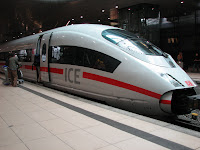

Here are some tips about the trains and the EuRail Pass.
1. You cannot buy EuRail Pass in Europe. It has to be bought in your home country. It is not an e-Ticket, but a paper based ticket which comes to your home address in a snail-mail. So, allow enough time for the pass to get to you.
2. You do not get a second class pass unless you are 26 years or less (Youth Saver Pass). But second class tends to be crowded and if you are travelling with luggage, there is no place for the luggage there.
3. At the time you buy your pass, you can opt for the number of days. While counting the number of days, count your travel days, not those of your stay. If you are hopping from one city to another, then it is a travel day. It is also a travel day if you are going to do a longish day trip, e.g. München-Salzburg and back; count this as a travel day. But if you are going to explore the city locally or just laze around for a day then don’t count it as travel day. This will help you to not lose any days for which you have already paid money. However, it is not possible to add a day to the pass, if your plan changes. You will have to buy separate tickets for that.
4. Some goodies that might actually help planning your trip are not told beforehand, e.g. if you buy a pass for Germany, a Munich-Salzburg trip is free; you don’t have to buy a pass for Austria in that case. Some other minor things are discounts on S-Bahn or free trip from CDG Airport to Paris Gare Du Nord etc.
5. There is no restriction on how many times a day you can use the pass. But be sure to read about the rules on how to count the days if your journey involves overnight travel in a City Night Line Express.
6. For some trains reservations are compulsory. On these routes, you may not be allowed entry to the train without a reservation. Even if reservations are not compulsory someone may still have it, so don’t be surprised if someone comes over and says “das ist mein Platz!”.
7. Cost of reservations is not included in the pass; it is extra. It varies depending on the train company. You may pay as much as EUR 41 on Paris-Brussels Midi section traveling Thalys. Almost all TGV routes are reservation compulsory. DB-ICE may charge up to €5.00 per reservation.
8. Always validate your pass before boarding the train, even if you have a reservation. Our conductor in Paris insisted that if we board the train without entering our journey date, he will fine us €50.00.
9. In First Class, snacks/coffee etc. can be ordered on your seat, you don’t have to go to the Board Bistro. But it is usually a paid service. On some routes, it may be a free service or included in your “reservation charges”.
10. On international trains, expect Passport Control. It is not as organized as it is at the Airports. So, it might even happen multiple times. On Paris-Amsterdam train, we were asked to show the Passport twice, at Paris Gare du Nord station. But no major questions or anything to worry about. In Munich-Innsbruck section, a Police Officer did the round of all coaches checking passports. On all other international trains, there was no passport control at all.
11. Many stations, especially if you are taking a trip to a non-conventional spot, do not have escalators. So, pack light; otherwise, you have to haul big luggage on the staircase while changing trains.
12. The EuRail site has information on trains including the planned platform and it is more or less correct; so even if there are only five minutes to change trains, they are usually sufficient. In ICE trains, there are leaflets kept that explain the Reiseplan. The Reiseplan has information on all the stops the train is going to take, scheduled arrival and departure times and connecting trains from the stations. In case the train is delayed and you realize that you are going to miss the connection, speak to the conductor and he/she will be able to guide you about the next train.
13. The timetable that comes to you with the pass is not complete. There may be alternate or faster trains available on the route you choose. If in doubt, check with the Service Point or the website. The stations display boards of arrival and departure information, hour wise.
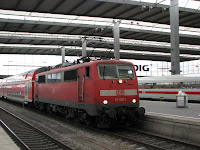

EuRail is very comfortable and easy to travel. The journey is also enjoyable as the nature outside can be very enchanting. The trains travel at a good speed, sometimes popping your ears! Except for one train, none was delayed, so on-time arrival/departures are more or less guaranteed. If you account for luggage check-in time, security, travel to the airport, both at the port of departure and arrival, overall, railway is faster and hassle free. We were first apprehensive about the compulsory first class pass. The very first encounter of costly reservations from Paris was also a cause of concern. But there are enough facilities that make up for everything and the pass turns out much cheaper than individual tickets. There are enough trains to take you places at any time of the day and even if EuRail seems costly, looking at the extent to which we used it, and how convenient it was, it was certainly paisa vasool.
There is a lot that Indian Railways can take from EuRail to make passengers comfortable and to make it an enjoyable experience, only if they can come out of their red taped mindset.
1. You cannot buy EuRail Pass in Europe. It has to be bought in your home country. It is not an e-Ticket, but a paper based ticket which comes to your home address in a snail-mail. So, allow enough time for the pass to get to you.
2. You do not get a second class pass unless you are 26 years or less (Youth Saver Pass). But second class tends to be crowded and if you are travelling with luggage, there is no place for the luggage there.
3. At the time you buy your pass, you can opt for the number of days. While counting the number of days, count your travel days, not those of your stay. If you are hopping from one city to another, then it is a travel day. It is also a travel day if you are going to do a longish day trip, e.g. München-Salzburg and back; count this as a travel day. But if you are going to explore the city locally or just laze around for a day then don’t count it as travel day. This will help you to not lose any days for which you have already paid money. However, it is not possible to add a day to the pass, if your plan changes. You will have to buy separate tickets for that.
4. Some goodies that might actually help planning your trip are not told beforehand, e.g. if you buy a pass for Germany, a Munich-Salzburg trip is free; you don’t have to buy a pass for Austria in that case. Some other minor things are discounts on S-Bahn or free trip from CDG Airport to Paris Gare Du Nord etc.
5. There is no restriction on how many times a day you can use the pass. But be sure to read about the rules on how to count the days if your journey involves overnight travel in a City Night Line Express.
6. For some trains reservations are compulsory. On these routes, you may not be allowed entry to the train without a reservation. Even if reservations are not compulsory someone may still have it, so don’t be surprised if someone comes over and says “das ist mein Platz!”.
7. Cost of reservations is not included in the pass; it is extra. It varies depending on the train company. You may pay as much as EUR 41 on Paris-Brussels Midi section traveling Thalys. Almost all TGV routes are reservation compulsory. DB-ICE may charge up to €5.00 per reservation.
8. Always validate your pass before boarding the train, even if you have a reservation. Our conductor in Paris insisted that if we board the train without entering our journey date, he will fine us €50.00.
9. In First Class, snacks/coffee etc. can be ordered on your seat, you don’t have to go to the Board Bistro. But it is usually a paid service. On some routes, it may be a free service or included in your “reservation charges”.
10. On international trains, expect Passport Control. It is not as organized as it is at the Airports. So, it might even happen multiple times. On Paris-Amsterdam train, we were asked to show the Passport twice, at Paris Gare du Nord station. But no major questions or anything to worry about. In Munich-Innsbruck section, a Police Officer did the round of all coaches checking passports. On all other international trains, there was no passport control at all.
11. Many stations, especially if you are taking a trip to a non-conventional spot, do not have escalators. So, pack light; otherwise, you have to haul big luggage on the staircase while changing trains.
12. The EuRail site has information on trains including the planned platform and it is more or less correct; so even if there are only five minutes to change trains, they are usually sufficient. In ICE trains, there are leaflets kept that explain the Reiseplan. The Reiseplan has information on all the stops the train is going to take, scheduled arrival and departure times and connecting trains from the stations. In case the train is delayed and you realize that you are going to miss the connection, speak to the conductor and he/she will be able to guide you about the next train.
13. The timetable that comes to you with the pass is not complete. There may be alternate or faster trains available on the route you choose. If in doubt, check with the Service Point or the website. The stations display boards of arrival and departure information, hour wise.


EuRail is very comfortable and easy to travel. The journey is also enjoyable as the nature outside can be very enchanting. The trains travel at a good speed, sometimes popping your ears! Except for one train, none was delayed, so on-time arrival/departures are more or less guaranteed. If you account for luggage check-in time, security, travel to the airport, both at the port of departure and arrival, overall, railway is faster and hassle free. We were first apprehensive about the compulsory first class pass. The very first encounter of costly reservations from Paris was also a cause of concern. But there are enough facilities that make up for everything and the pass turns out much cheaper than individual tickets. There are enough trains to take you places at any time of the day and even if EuRail seems costly, looking at the extent to which we used it, and how convenient it was, it was certainly paisa vasool.
There is a lot that Indian Railways can take from EuRail to make passengers comfortable and to make it an enjoyable experience, only if they can come out of their red taped mindset.
Wednesday, May 27, 2009
Walkathon
Panchita and I walk. When I mean walk, I really mean walk. In the eight days in Europe, we just walked and walked. So much that in the end every muscle, ligament, tendon and bone of our legs were aching. We walked to the Basilica of Sacré-Cœur from the metro station exploring garment and wool shops and hairdressers and toupees! We took a wrong road to the Palace in Amsterdam making it a longer route, but then we discovered different tram routes and a cheap souvenir shop! After having done the Neuschwanstein hike, we still walked from Karlsplatz to Marienplatz and in addition to that, Sonnenstraβe and area around it. In Salzburg, we did not take any public transport. Rothenburg ob der Tauber would probably be tired of our gloating on the walk thing…but we still enjoyed it very much!
But why walk? We believe that it takes us into neighborhoods that we would otherwise not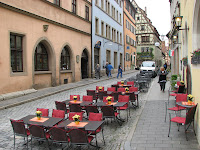 discover. Did you know people who live in La Defense area like flowering plants more than people who live around Canal St. Martin? That’s based on our unscientific observations of the two areas. Did you know eateries in Amsterdam can lure you by cheap prices, but with a fine print that your choice is not part of it? And who would have thought that the Germans really close their shops at 6 PM on a Saturday, unless it is selling beer? In addition, we know where to buy Indian groceries in Paris on account of being lost in the 10th arrondissement.
We plan to keep walking and discovering more!
But why walk? We believe that it takes us into neighborhoods that we would otherwise not
 discover. Did you know people who live in La Defense area like flowering plants more than people who live around Canal St. Martin? That’s based on our unscientific observations of the two areas. Did you know eateries in Amsterdam can lure you by cheap prices, but with a fine print that your choice is not part of it? And who would have thought that the Germans really close their shops at 6 PM on a Saturday, unless it is selling beer? In addition, we know where to buy Indian groceries in Paris on account of being lost in the 10th arrondissement.
We plan to keep walking and discovering more!
Sunday, May 24, 2009
Europe 2
I never got around writing anything about our first trip to Europe. Well, it was not a trip really…may be that’s why!

But before we knew it, we were planning for a return! Paris the second time was a charm! And this time, the itinerary included Amsterdam, Rothenburg ob der Tauber, Munich, Neuschwanstein Castle, Innsbruck/Wattens and Salzburg. And all of this in just eight days! It was tiring but a very refreshing break.

But before we knew it, we were planning for a return! Paris the second time was a charm! And this time, the itinerary included Amsterdam, Rothenburg ob der Tauber, Munich, Neuschwanstein Castle, Innsbruck/Wattens and Salzburg. And all of this in just eight days! It was tiring but a very refreshing break.
Tuesday, April 21, 2009
May be a Pet Peeve
Much to my annoyance, Office 2007 drew a blue squiggly line, when I typed, “may be”. It wanted me to change that to “maybe”. Last I knew, the two are better placed as different words and not as single word. Call me old fashioned if you will, but I dread to think that some day, it will become acceptable to use words like “infact” and “atleast”.
And as I was typing this, I was presented a similar predicament on “some day” versus “someday”. Here’s the difference between the two - http://www.bartleby.com/64/C003/0272.html and then, here’s the difference between “maybe” and “may be” http://www.english-test.net/forum/ftopic23039.html
And as I was typing this, I was presented a similar predicament on “some day” versus “someday”. Here’s the difference between the two - http://www.bartleby.com/64/C003/0272.html and then, here’s the difference between “maybe” and “may be” http://www.english-test.net/forum/ftopic23039.html
Saturday, April 11, 2009
कुठे गेली नऊवारी साडी?
कुठे सण समारंभाला गेल की माझी नजर ऊगाच भिरी-भिरी फिरत असते. कुठे तरी साळकाया-माळकायांच्या घोळक्यात एखादी आजी दिसेल, मग त्यासगळ्या बयकांच्या प्युवर-सिल्कच्या सड्य़ांमध्ये तिची एकटीचीच ठेवणीतली, खास आजच्या समारंभासाठी काढलेली सुती नऊवारी साडी ऊठून दिसेल! हातावर, चेहऱ्यावर सुरकुत्या असतील, डोक्यावर अंबाडा, आजोबा हयात असतील तर कपळावर ठसठशीत कुंकू असेल...
पुर्वी मला वाटायच, बायका म्हाताऱ्या झाल्या की नऊवारी नेसतात. पुढे कधीतरी हा गैरसमज दूर झाला. संस्क्रुती-भाषा मरायला लागली यावर माझा विश्वास नाही, पण नऊवारी साड्या घालून, दसरा मिरवणूक, पाडवा मिरवणूक नी सहित्य दिंडीमध्ये सहभागी होणऱ्या बायकांपेक्षा किंवा म्रुणाल कुलकर्णीच्या रमाबाई पेशव्यांपेक्षा नऊवारी नेसावी तर एखाद्या आजीनेच!
पुर्वी मला वाटायच, बायका म्हाताऱ्या झाल्या की नऊवारी नेसतात. पुढे कधीतरी हा गैरसमज दूर झाला. संस्क्रुती-भाषा मरायला लागली यावर माझा विश्वास नाही, पण नऊवारी साड्या घालून, दसरा मिरवणूक, पाडवा मिरवणूक नी सहित्य दिंडीमध्ये सहभागी होणऱ्या बायकांपेक्षा किंवा म्रुणाल कुलकर्णीच्या रमाबाई पेशव्यांपेक्षा नऊवारी नेसावी तर एखाद्या आजीनेच!
Monday, March 02, 2009
The Medieval Maratha Country
My love affair with the Maratha History continues with another addition to the collection on that subject. This time with a book by one A. R. Kulkarni titled The Medieval Maratha Country. The book was pointed out fondly by Panchita, even when she knew it will be an attention hog! The book contains a collection of essays that talk about Proselytization in Goa, the condition of women, fort structure and hierarchy of a fort administration, revenue and wealth of the fledgling empire, foreign relations – especially with the European powers etc. It largely revolves around Shivaji and his period with only little mention to the latter period of the polity dominated by the Peshwas. I have already started reading it…hopefully will do a good job at finishing off the book.
After this one, there are two books lined up already. And these days, Panchita is busy reading the old copy of the Marathi translation of Not Without My Daughter.
After this one, there are two books lined up already. And these days, Panchita is busy reading the old copy of the Marathi translation of Not Without My Daughter.
Monday, December 08, 2008
An Opinion on Opinion
Such are the times that everyone has an opinion on the Mumbai Attacks. Some of us lesser mortals just publish them on our blogs and are satisfied if a reader or two wander here. May be, leave a comment. Some are more privileged to get their opinions published in respected newspapers! But I have an opinion on the opinion.
In this Sunday’s Indian Express, Lord Meghnad Desai has berated the government for the attacks on Bombay – not Mumbai, because he apparently grew up in the city when it was known as Bombay. He also demands that Bombay be accorded statehood and somehow believes that that will solve the problems. Why? First off, it was Nehru’s wish that Bombay be a separate state and secondly, even though the Chief Minister and the Home Minister were asked to go, the punishment wasn’t enough, especially since both of them were not from Bombay and it somehow does not make them accountable.
In my opinion, this opinion itself is flawed. Lord Desai, what we are seeing here is the failure of the Westminster style democracy, which does seem to have worked well for countries like the UK. Let us flashback a little bit. 9/11/2001 – ghastly attacks struck New York City. Who sprang into action? The Mayor of New York City. Whatever political mileage and revenues from books Rudy Giuliani drove out of this event, he should be commended for his leadership in those difficult times. When President George W Bush went on TV, he talked of smoking the terrorists out of their holes alive or dead. He did not get into the bickering of petty politics and pushing blame around. No one, naively or not, believed that statehood to New York City would solve the problems.
Now flash forward. The real question is that in case of our hierarchy and various positions are we ourselves clear, who does what? The Home Minister is routinely in charge if internal security matters (strangely, the Federal or Union Home Minister is also in charge of the Border Security Force in peace times!). But then what happens to the Mayor of the city? What does the Municipal Commissioner do? Who does the Police Chief of a city report to? Aren’t the authorities like either the Municipal Commissioner or the Mayor of the City and the Police Chief of that city expected to be in charge of the general well-being of the city? Aren’t these guys more close to what is happening in the city and shouldn’t they be in touch with each other always? When broader help, like the NSG involvement is required, who is the liaison for the Intelligence Chiefs? What is the command structure like? We hear that the Intelligence Bureau had given some information to someone. Do we know who gave the information to whom? Do we know who is accountable to do what?
Now with this imbroglio, if Mumbai were to be renamed again as Bombay and were given statehood, how are all these problems going to be solved? Just because the Chief Minister will then be ‘local’ does not make him or her any more accountable. If the real hands behind the power are somebody else’s then how will it help? Are smaller states like Mizoram, Goa to name a few, happier because they are small and have local leaders? Would different departments, such as the intelligence guys and the defense guys and the internal security guys start coordinating better because the state is small?
Even more important, how many times has it happened that the leader was chosen through the voting of the elected members of the legislature? Would you not agree that every leader we have, including the prime minister himself, has been appointed? What are we going to do about the extra-constitutional remote controls like Sonia Gandhi et al. then? Does really unseating an MP or MLA make a difference? Our earlier Union Home Minster was such a guy, wasn’t he? He was unseated by his own folks in the Lok Sabha election, but rewarded for his loyalty to the Gandhi-clan by giving him what is considered an important post in the Cabinet. It is deplorable that RR Patil and Vilas Deshmukh are going to go unpunished; the only loss to them is no opportunity of hoarding money and power for the next year or so. But if anything, propose accountability here too…put these guys in jail for incompetence and let a justice system decide what to do with them. If we establish accountability like that, being local won’t matter. Is the question of accountability even valid in our context here?
Let us not rush into creating more states and adding more layers of bureaucracy unless we have answered these more important questions. And even more important, let us not divert attention from reforms and correcting past mistakes, if we ever get to that, to more politically motivated solutions like statehoods.
In this Sunday’s Indian Express, Lord Meghnad Desai has berated the government for the attacks on Bombay – not Mumbai, because he apparently grew up in the city when it was known as Bombay. He also demands that Bombay be accorded statehood and somehow believes that that will solve the problems. Why? First off, it was Nehru’s wish that Bombay be a separate state and secondly, even though the Chief Minister and the Home Minister were asked to go, the punishment wasn’t enough, especially since both of them were not from Bombay and it somehow does not make them accountable.
In my opinion, this opinion itself is flawed. Lord Desai, what we are seeing here is the failure of the Westminster style democracy, which does seem to have worked well for countries like the UK. Let us flashback a little bit. 9/11/2001 – ghastly attacks struck New York City. Who sprang into action? The Mayor of New York City. Whatever political mileage and revenues from books Rudy Giuliani drove out of this event, he should be commended for his leadership in those difficult times. When President George W Bush went on TV, he talked of smoking the terrorists out of their holes alive or dead. He did not get into the bickering of petty politics and pushing blame around. No one, naively or not, believed that statehood to New York City would solve the problems.
Now flash forward. The real question is that in case of our hierarchy and various positions are we ourselves clear, who does what? The Home Minister is routinely in charge if internal security matters (strangely, the Federal or Union Home Minister is also in charge of the Border Security Force in peace times!). But then what happens to the Mayor of the city? What does the Municipal Commissioner do? Who does the Police Chief of a city report to? Aren’t the authorities like either the Municipal Commissioner or the Mayor of the City and the Police Chief of that city expected to be in charge of the general well-being of the city? Aren’t these guys more close to what is happening in the city and shouldn’t they be in touch with each other always? When broader help, like the NSG involvement is required, who is the liaison for the Intelligence Chiefs? What is the command structure like? We hear that the Intelligence Bureau had given some information to someone. Do we know who gave the information to whom? Do we know who is accountable to do what?
Now with this imbroglio, if Mumbai were to be renamed again as Bombay and were given statehood, how are all these problems going to be solved? Just because the Chief Minister will then be ‘local’ does not make him or her any more accountable. If the real hands behind the power are somebody else’s then how will it help? Are smaller states like Mizoram, Goa to name a few, happier because they are small and have local leaders? Would different departments, such as the intelligence guys and the defense guys and the internal security guys start coordinating better because the state is small?
Even more important, how many times has it happened that the leader was chosen through the voting of the elected members of the legislature? Would you not agree that every leader we have, including the prime minister himself, has been appointed? What are we going to do about the extra-constitutional remote controls like Sonia Gandhi et al. then? Does really unseating an MP or MLA make a difference? Our earlier Union Home Minster was such a guy, wasn’t he? He was unseated by his own folks in the Lok Sabha election, but rewarded for his loyalty to the Gandhi-clan by giving him what is considered an important post in the Cabinet. It is deplorable that RR Patil and Vilas Deshmukh are going to go unpunished; the only loss to them is no opportunity of hoarding money and power for the next year or so. But if anything, propose accountability here too…put these guys in jail for incompetence and let a justice system decide what to do with them. If we establish accountability like that, being local won’t matter. Is the question of accountability even valid in our context here?
Let us not rush into creating more states and adding more layers of bureaucracy unless we have answered these more important questions. And even more important, let us not divert attention from reforms and correcting past mistakes, if we ever get to that, to more politically motivated solutions like statehoods.
Wednesday, December 03, 2008
Punish the Real Culprits
No holds barred. Here’s what needs to happen, and now:
1. As a first step, Dr. Singh should fire his wimpy speech writer. When you are addressing the nation after such a shameful calamity, at least let there be some chest thumping while talking, all right; you are trying to motivate a billion plus horrified people here. Work can be outsourced to either McCain or Obama’s speech writer.
Convene an immediate session of the parliament. Following bills/ordinances/executive orders – whatever is the right thing need to be passed:
2. Repeal all alphabet category securities (and numeral and mathematical notations along with it) of everyone.
3. All the members of parliament and legislative assemblies all over India should be stripped off of their privileges. Live like common masses, may be the skin will not grow thick then.
4. Justice delayed is justice denied. If a case is open in the court (any court) for more than a year, the Judge should be publically lashed, Saudi Arabia style. And implement this ordinance immediately, for current open cases.
5. The chiefs of various intelligence bureaus and Coast Guard should be tried for treason. The only punishment should be death penalty.
6. If a policy maker/law maker is found guilty of misdemeanors for not doing his or her duty as policy maker/law maker of the land, he or she should be publically lashed, again Saudi Arabia style. This should be retroactively implemented and every sitting MP or MLA/MLC should be punished right away. They have taken things for granted for too long anyways.
7. Every case of corruption should be a punishable offence by death penalty only.
1. As a first step, Dr. Singh should fire his wimpy speech writer. When you are addressing the nation after such a shameful calamity, at least let there be some chest thumping while talking, all right; you are trying to motivate a billion plus horrified people here. Work can be outsourced to either McCain or Obama’s speech writer.
Convene an immediate session of the parliament. Following bills/ordinances/executive orders – whatever is the right thing need to be passed:
2. Repeal all alphabet category securities (and numeral and mathematical notations along with it) of everyone.
3. All the members of parliament and legislative assemblies all over India should be stripped off of their privileges. Live like common masses, may be the skin will not grow thick then.
4. Justice delayed is justice denied. If a case is open in the court (any court) for more than a year, the Judge should be publically lashed, Saudi Arabia style. And implement this ordinance immediately, for current open cases.
5. The chiefs of various intelligence bureaus and Coast Guard should be tried for treason. The only punishment should be death penalty.
6. If a policy maker/law maker is found guilty of misdemeanors for not doing his or her duty as policy maker/law maker of the land, he or she should be publically lashed, again Saudi Arabia style. This should be retroactively implemented and every sitting MP or MLA/MLC should be punished right away. They have taken things for granted for too long anyways.
7. Every case of corruption should be a punishable offence by death penalty only.
Wednesday, November 05, 2008
The Indian Summer of Dry Valley Johnson
Is over, without the theatricals, of course.
Note: The title plagiarized from O Henry’s short story of the same name and same meaning, without the theatricals, of course.
Note: The title plagiarized from O Henry’s short story of the same name and same meaning, without the theatricals, of course.
Subscribe to:
Posts (Atom)


